Transporting a motorcycle from the city to a Dirt bike park is a round-trip logistics job, not just a morning drive. The outbound bike is clean, the rider is fresh, and the schedule feels generous. The return may involve mud, worn gear, a mechanical issue, traffic, and a facility closing time. Planning both directions before departure keeps the day from ending with an improvised load in the dark.
Choose the park before choosing the transport
Verify that the facility is open on the travel date and that the motorcycle and rider meet its rules. Confirm trailer parking, arrival procedures, sound requirements, waivers, and whether reservations are needed. Ask about the road into the property: a long trailer may have difficulty with a narrow gate, steep gravel approach, or tight turnaround even when passenger cars enter easily.
Record a precise destination rather than relying on the park name. Some facilities have separate spectator, camping, and rider entrances. Share the correct gate and an on-site contact with whoever is driving or transporting the bike.
Open trailer, enclosed trailer, or professional transport?
An open trailer is easy to inspect and may be practical for riders with the correct tow vehicle, hitch rating, loading equipment, and tie-down experience. An enclosed trailer provides weather and gear protection but introduces clearance, ventilation, weight, and backing considerations. Renting either one adds pickup and return deadlines that must fit the park day.
Professional transport may make sense when the rider lacks a suitable tow vehicle, the bike is not road legal, several schedules must align, or fatigue after riding is a concern. Ask whether gear is included, how mud or a non-running bike is handled, and who must be present at both ends.
Dirt bike park loading begins on level ground
Use a stable surface with space behind the trailer, proper lighting, and no passing traffic. Confirm that ramps are rated, attached, and aligned with the wheel path. A spotter should agree on simple directions before the bike moves. Do not ride up a ramp unless the equipment and operator are designed and trained for that method.
Place the front wheel in a suitable chock and attach tie-downs to sound structural points. Protect lines and bodywork from straps. Stabilize the rear as appropriate for the setup, secure the ramp and stand, and tie off strap tails. Test the load by pushing firmly from several directions before moving the vehicle.
The gear compartment needs boundaries
Fuel, oils, tools, boots, helmets, food, and clean clothing should not become one loose pile. Carry fuel only in approved containers and follow the vehicle, trailer, park, and local rules. Keep helmets where they cannot be crushed or exposed to chemicals. Put wet and muddy items in washable bins for the return.
Distribute cargo within the towing setup’s limits and secure every item. A toolbox that slides during braking can damage the motorcycle or alter handling. Weighing or checking the loaded arrangement is more credible than deciding it “looks balanced.”
Route planning starts with the tow combination
A route that feels easy on a motorcycle may not suit a trailer. Check height, weight, parkway restrictions, toll classification, fuel stops, and legal parking for breaks. Leave additional following distance and avoid a schedule that requires aggressive lane changes. If another person will drive home, make sure that person is comfortable with the loaded setup before the park closes.
Plan a legal place for the first tie-down inspection. Recheck after the load settles and after unusually rough pavement. Do not stop on a narrow shoulder simply because a strap looks different in the mirror.
Design the return before the first lap
Know the park’s last riding time and gate-closing procedure. Set a personal cutoff that leaves daylight and energy for loading. Reserve water and food for the pack-up period. If the bike is muddy, remove only what is necessary for safe transport at the approved wash or maintenance area; do not spread soil and fluids across the parking lot.
Inspect the motorcycle before loading. A damaged wheel, leaking fluid, stuck control, or broken attachment point may change how it can be secured. Photograph the condition and explain it if a transport provider is called. “It will not start” is less useful than noting whether it rolls, steers, holds air, and has visible damage.
When the original ride home is no longer safe
Mechanical trouble, rider injury, exhaustion, severe weather, or a tow-vehicle problem can invalidate the return plan. Decide in advance who can collect people, where the bike may legally remain, and which motorcycle transport service can reach the property. Do not pressure an injured rider to load equipment or a fatigued driver to tow.
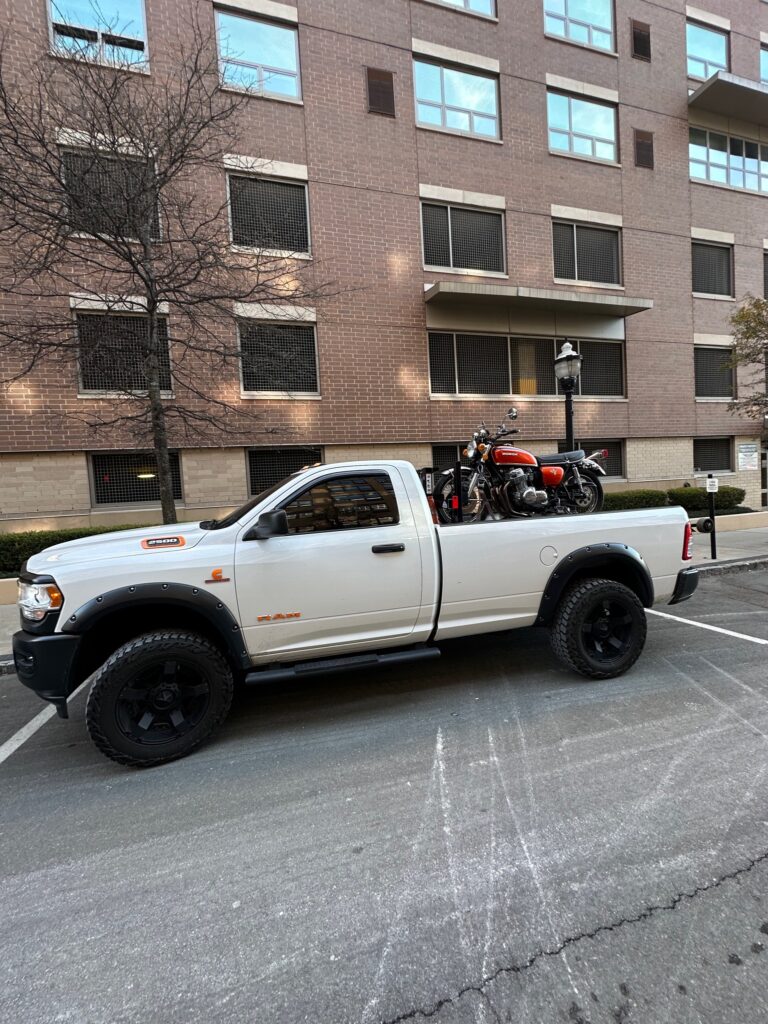
MAD Transpo NYC states that it transports dirt bikes and other motorcycles and provides roadside assistance in the New York City metropolitan area. A recovery request should include the park’s exact entrance, gate hours, bike condition, destination, and whether staff can remain for the pickup.
A transport-only packing check
- Keys and spare key separated.
- Bike identification and ownership documents available.
- Rated ramps, chock, straps, soft loops, and locks inspected.
- Loose accessories removed.
- Fuel and chemicals contained according to rules.
- Trailer lights, tires, coupling, chains, and load limits checked.
- Return contact and backup plan shared with the group.
The checklist supports a competent setup; it does not replace towing instruction or manufacturer guidance.
Group transport needs named responsibilities
When several motorcycles share a trailer or vehicle, assign one load lead and one verifier. Record which tie-downs belong to which bike and keep keys individually labeled. Riders should not adjust another motorcycle’s straps without telling the lead. If one bike is removed early, re-evaluate the remaining weight distribution and restraints before moving again.
Agree on passenger seating and gear space before departure. Helmets are not packing filler, and fuel containers do not belong beside food or loose electrical equipment. A written equipment list prevents five riders from bringing pumps while nobody brings the correct ramp pin.
After-hours recovery deserves a destination plan
If a breakdown occurs near closing, the preferred mechanic may not accept delivery. Identify a home or authorized storage alternative before the trip. Ask the park whether a disabled motorcycle may remain temporarily and under what conditions, but do not assume staff can hold keys or stay late.
Share the transport provider’s arrival estimate with the gate contact and confirm access for the actual vehicle. A locked rural gate can defeat a recovery that was otherwise dispatched correctly. If the motorcycle must be moved to a public meeting point, let park staff direct that move and do not push it onto an unsafe road.
Trailer parking must remain legal after unloading
A trailer does not disappear when the motorcycles leave it. Confirm where the tow vehicle and trailer may stay, whether they need a pass, and when the lot closes. Do not detach a trailer in an unapproved area or block emergency and paddock routes. Mark the parking location for riders who return separately.
Inspect the tow vehicle too
Motorcycle preparation cannot compensate for worn tow-vehicle tires, lighting faults, an unsuitable hitch, or exceeded ratings. Follow the vehicle, hitch, and trailer manufacturer requirements and applicable law. If the driver is not competent with backing and braking, choose a different transport arrangement before departure.
For a planned park run or a bike that cannot make the return trip, contact MAD Transpo NYC with the exact gate, schedule, motorcycle condition, and New York destination.