
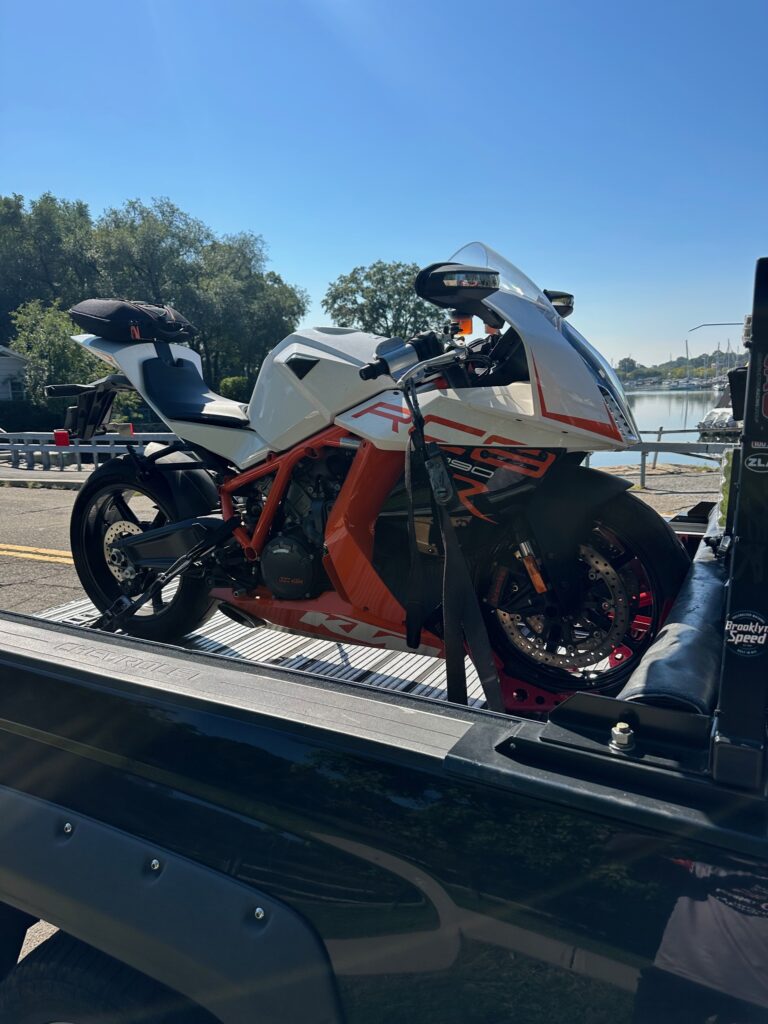
Local motorcycle transport to a repair shop or dealership succeeds when three parties share the same appointment: the owner, the transporter, and the receiving business. The mileage may be short, yet the handoff can fail if the service desk is closed, the shop does not know the bike is coming, or nobody has authority to approve diagnostic work. A complete repair trip therefore begins with the repair order, not the truck.
Call the receiving shop first
Confirm the appointment date, intake hours, address, and entrance used for motorcycle deliveries. Ask whether the shop needs the owner present, a signed authorization, a key tag, or a description of symptoms. Get the name of the person who can accept the bike. A general voicemail is not a receiving plan.
Dealership campuses can have separate sales, service, and parts entrances. A driver sent to the showroom may be unable to unload there. Request a pin or clear landmark for the service entrance and note any height limit, loading dock, alley, or one-way access.
Describe the problem without diagnosing it
Tell the shop and transporter what the motorcycle actually does. Does it crank but not start? Did a warning light appear? Is a tire flat, a wheel locked, a lever broken, or fluid leaking? Note the last time it ran and any recent work. Avoid announcing a certain failed component unless a qualified technician has confirmed it.
The transport provider needs movement facts as well: whether the bike rolls, steers, holds air, has working brakes, and can be reached by the loading vehicle. A motorcycle with a seized wheel requires different handling from one with an electrical no-start.
Local motorcycle transport should preserve the evidence
Do not repeatedly start a motorcycle that is making a severe mechanical noise, leaking fuel, overheating, or showing another warning that suggests further operation could cause damage. Photograph the instrument display and visible condition. Leave disconnected or removed parts with the bike only when they can be packaged and accepted safely.
If the failure happened on the road, write down the circumstances while they are fresh: speed, temperature, fuel level, sound, smell, warning lights, and what happened immediately before the stop. That narrative helps the technician more than a vague statement that the bike “just died.”
Prepare the key and repair authorization
Remove unrelated keys and label the motorcycle key with the owner’s name and phone number. If the bike has an immobilizer, alarm fob, steering lock, or unusual start sequence, explain it. The shop should know the maximum diagnostic amount or the exact person to call before work begins. Transport authorization and repair authorization are separate decisions.
Keep the registration and insurance documents according to the shop’s instructions. Do not leave a wallet, building fob, garage remote, toll device, or personal electronics attached to the motorcycle. Empty removable luggage unless the service itself concerns that equipment.
Make the pickup position workable
A basement garage, backyard, narrow alley, or mechanical parking rack may prevent direct truck access. Measure height and width, identify ramps and turns, and explain whether the bike can be rolled to the street. If building staff must open a gate or reserve a loading area, make that arrangement before the pickup window.
At curbside, choose a legal location with enough room for loading. The transporter cannot safely block a travel lane because the owner expected a two-minute stop. City conditions change quickly; keep the phone available in case the meeting point needs a lawful adjustment.
Document the handoff on both sides
Take a condition set at pickup, including both sides, existing damage, the odometer, and accessories that remain. Confirm destination and recipient. At the shop, the receiving employee should acknowledge the bike and key. The owner should receive notice that delivery is complete and know how the shop will communicate its diagnosis.
MAD Transpo NYC states that it transports motorcycles to mechanics and dealerships throughout the New York City metropolitan area. When booking, provide the shop’s real intake instructions rather than only its public street address.
The return trip is a new job
Do not assume repair completion automatically schedules transport home. Ask the shop to notify the owner when the motorcycle is fully assembled, released, and available during a specific window. Confirm the final balance and keys before dispatching anyone. If the bike remains unsafe to roll or ride, update the transporter.
On return, compare the motorcycle with the service order and delivery condition. Review the technician’s break-in or follow-up instructions before riding. A repair that changes brakes, tires, controls, or suspension may deserve a cautious first ride in a low-complexity environment.
A dispatch note for a shop visit
- Owner and backup phone number.
- Motorcycle make, model, color, and condition.
- Exact pickup location and access contact.
- Shop name, service entrance, intake hours, and receiving employee.
- Key and alarm instructions.
- Symptom summary without speculation.
- Authorization or repair-order reference.
Send the same core note to everyone involved. Small differences between three separate conversations are how a simple local move becomes a missed appointment.
A tow-pound release has its own sequence
Before scheduling pickup from an NYPD or other secured tow facility, confirm the current release requirements with that facility. The owner may need identification, proof of ownership, payment, or another authorization. Complete every step that must happen in person and learn which gate commercial recovery vehicles use. Dispatching a transporter before the motorcycle is legally releasable creates waiting without solving the paperwork.
Ask whether the bike rolls and whether facility staff can help position it; do not assume they will. Crash damage, a locked fork, missing key, or police hold should be stated. Choose the delivery shop in advance and confirm it can accept a damaged motorcycle during the expected window.
Protect the diagnostic story during transport
If a shop requested that the motorcycle arrive without further operation, honor that request. Do not wash away a leak, clear fault codes, disconnect the battery, or add fluids unless instructed for safety. Place any fallen fasteners or broken pieces in a labeled bag and tell the service adviser where they came from.
For an intermittent symptom, give the technician a short chronology rather than a theory. Include cold or hot engine, speed, weather, warning display, recent fuel or service, and whether restarting changed the behavior. Transport prevents additional riding from muddying that story.
Coordinate after-hours key return
Some service departments accept a motorcycle after the advisers leave, but a drop box designed for car keys may not document a transported bike adequately. Ask the shop for its exact procedure and who assumes custody. Never leave a motorcycle outside a closed business based on an unlocked gate or an informal suggestion.
When the diagnosis changes the destination
A shop may discover that specialized work is required elsewhere. The owner should authorize the new destination and obtain acceptance from the second facility before another move. Update the condition report if the motorcycle has been disassembled or no longer rolls normally. Parts removed during diagnosis need their own labeled, secured handoff.
Special-event and photoshoot deliveries
A bike going to a production or display site needs a load-in contact, floor-protection plan, placement instructions, and a release time. Confirm whether the engine may be started indoors and who may touch the motorcycle. Schedule collection before the venue removes access or security staff.
To coordinate a motorcycle delivery to a New York mechanic or dealership, provide the confirmed intake details and bike condition to MAD Transpo NYC.