Getting your NYS motorcycle permit is an exciting first step. It is also the point where a lot of new riders realize how many rules come with it. A learner permit lets you practice, but it does not let you ride anywhere, anytime, or with anyone. And when your road test day comes, you still need a legal way to get your motorcycle to the test site.
This guide walks through the main NYS motorcycle permit rules as published by the New York State Department of Motor Vehicles, with a focus on two practical questions: where you can and cannot practice, and how to get your bike to the road test. Rules can change, so always confirm the details on the official NYS DMV motorcycle permit and license page before you ride or book anything.
The basics of the NYS motorcycle permit
According to the NYS DMV, a New York State resident must have a Class M or Class MJ driver license or learner permit to drive a motorcycle, and you must get a motorcycle learner permit before you can get a motorcycle license.
To earn the permit, you apply with proofs of identity, age, and residence and take a written test at a DMV office. The DMV states that to pass, you must get at least 14 of the 20 multiple-choice questions correct, including at least two of the four questions about road signs.
The DMV also notes that if you plan to apply for a motorcycle permit and another class of learner permit, such as a car permit, you should apply for the other permit first.
Who must supervise you while you practice
Practicing on a motorcycle permit is not solo riding. The DMV’s learner permit restrictions page says that if you have a motorcycle learner permit, your supervising driver must:
- Be age 21 or older and hold a valid motorcycle license (the DMV’s motorcycle permit page says from any state)
- Exercise general supervision while you operate the motorcycle
- Remain within one-quarter mile of you, keeping you in sight at all times
The DMV also says the only passenger who can ride with you on the motorcycle is your supervising driver. No friends, no partners, no kids on the back while you are on a permit.
In practice, this usually means riding with an experienced friend or family member who follows or leads on their own motorcycle. Plan your practice sessions around their schedule.
Where you cannot ride on a permit
This is the part many new riders in New York City miss. According to the DMV’s learner permit restrictions, you may not drive with a learner permit:
- On any street within a park in New York City
- On any bridge or tunnel under the jurisdiction of the Triborough Bridge and Tunnel Authority
- On the Cross County, Hutchinson River, Saw Mill River, or Taconic State parkways in Westchester County
- In a DMV road test area
For NYC riders, the bridge and tunnel rule is a big one. Several major crossings between boroughs fall under the Triborough Bridge and Tunnel Authority, now operating as MTA Bridges and Tunnels. If your practice route or your route to a test site would cross one, you will need another plan. Check which crossings are covered on the MTA’s official site before you plan a route.
Extra limits for riders under 18
If you hold a Class MJ permit, the DMV says you must also follow the restrictions for drivers under 18. One of these is that junior permit holders may not drive in New York City between 9 p.m. and 5 a.m. Review the full under-18 rules on the DMV site, because they vary by region.
How much practice the DMV recommends
Before you schedule a road test, the DMV recommends at least 30 hours of practice on a motorcycle, with or without formal instruction, including at least 10 hours in medium to high-volume traffic.
For NYC riders, finding legal practice space is part of the challenge. Quiet streets outside parks, empty lots where you have permission to ride, and approved training courses are common choices. Avoid any area marked as a DMV road test site.
Pre-licensing course and the road test waiver
The DMV states that if you do not already have another class of New York State driver license, you must complete a pre-licensing course or a driver education course before you can schedule a road test.
Some riders may not need a road test at all. The DMV describes a road test waiver for riders who are at least 16, hold a valid New York State driver license of another class, hold a valid motorcycle learner permit, and have completed an approved basic rider course through the New York State Motorcycle Safety Program within the past two years. Courses taken out of state do not qualify. Check the DMV page for the exact current requirements before relying on the waiver.
If you are under 18, the DMV says you must wait at least six months from the date you received your learner permit to schedule your road test.
Road test day: getting your motorcycle there
This is where permit rules and logistics collide. On test day, the DMV says you must bring a registered and inspected motorcycle to the test, along with a registered and inspected motor vehicle and a driver age 21 or older licensed to drive it. That vehicle is used to transport the examiner, and the DMV says no other passengers are allowed.
The DMV page also states that if the driver does not have a valid license with a motorcycle endorsement, the motorcycle must be brought to the road test site by trailer or pickup truck.
In other words, you generally cannot ride your own motorcycle to the test on just a permit unless your supervisor rules are met, and the route also has to respect permit restrictions on parks, certain bridges and tunnels, and road test areas.
Options for getting the bike to the test site
- Ride with a licensed supervisor. Only if the full route avoids restricted roads and your supervisor meets every DMV requirement.
- Have a licensed rider bring it. A friend with a motorcycle license rides the bike to the site, though you still need the separate car and driver for the examiner.
- Trailer or pickup truck. The DMV mentions these specifically. Load and secure the bike carefully.
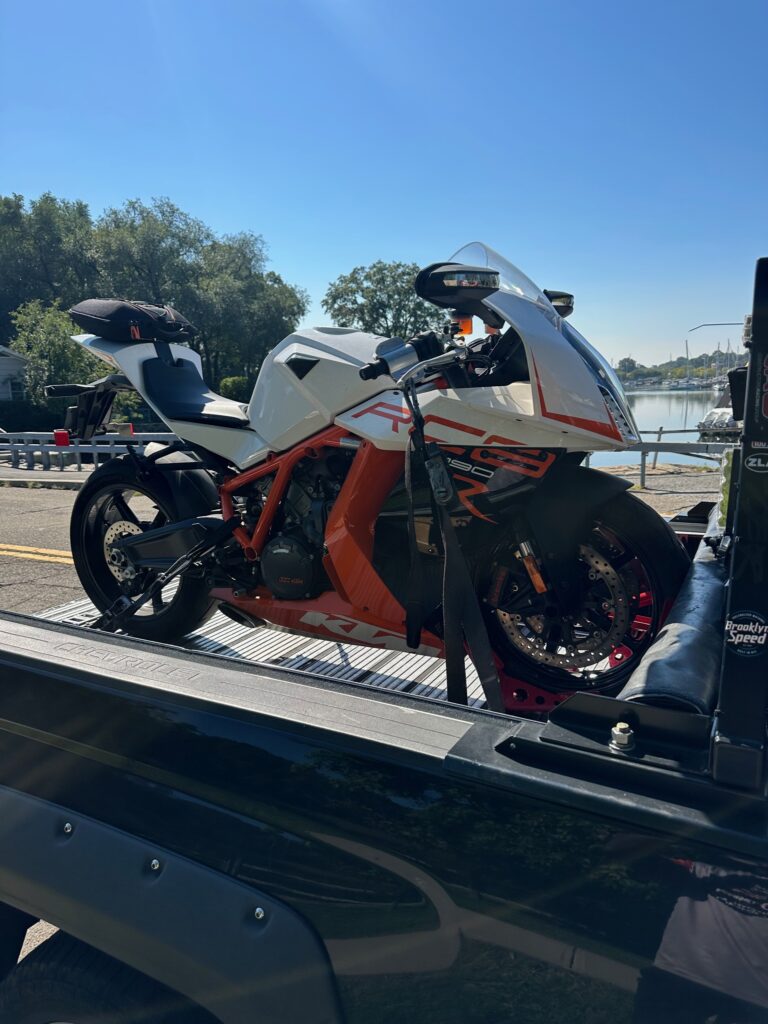
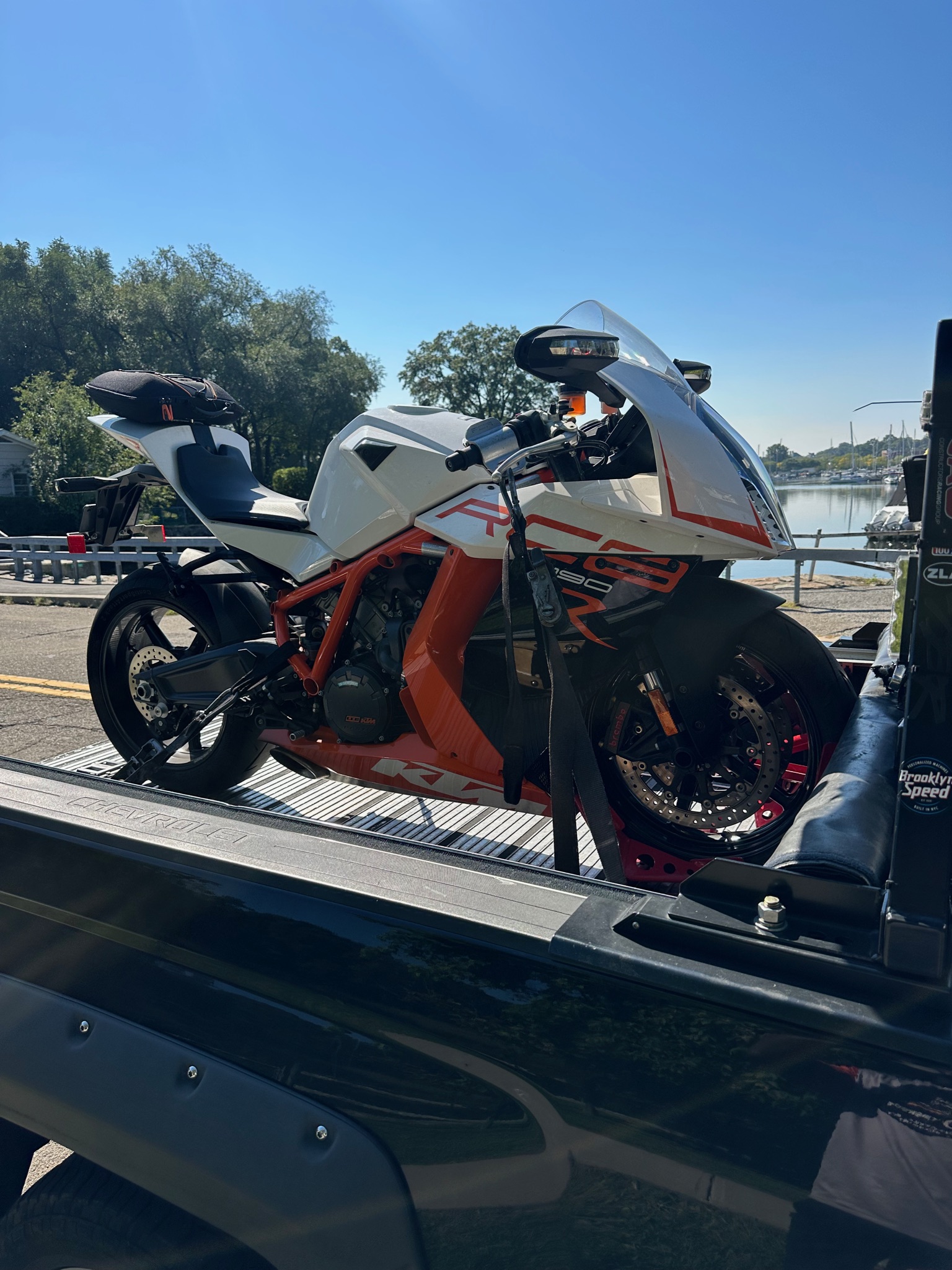
- Professional motorcycle transport. A flatbed motorcycle transport service may be an option. The DMV’s text specifically names a trailer or pickup truck, so call your test site or the DMV to confirm a flatbed delivery is acceptable before you book.
Timing tips for test day
The DMV notes that road tests are almost always held on weekdays and may be canceled for bad weather. If you are arranging transport, book with a little flexibility, plan to arrive early, and know what you will do if the test is canceled. Keep the transport company’s number handy in case the bike needs to go back home on short notice.
Frequently asked questions
Can I ride my motorcycle alone with a NYS motorcycle permit?
No. The DMV requires a supervising driver age 21 or older with a valid motorcycle license who stays within one-quarter mile and keeps you in sight. The supervisor is the only passenger allowed.
Can I ride on NYC bridges with a motorcycle permit?
Not on bridges or tunnels under the jurisdiction of the Triborough Bridge and Tunnel Authority, according to the DMV. Check which crossings are covered on the MTA’s official site before you plan a route.
How do I get my motorcycle to the road test?
The DMV says that if the accompanying driver does not hold a motorcycle license, the motorcycle must be brought by trailer or pickup truck. Confirm with the DMV or your test site whether other options, such as a flatbed transport service, are acceptable.
Does MAD Transpo NYC issue motorcycle permits or run road tests?
No. Permits, licenses, and road tests are handled only by the NYS DMV. MAD Transpo NYC is a motorcycle towing and transport company.
Need your bike moved before test day?
If you need your motorcycle moved within the NYC metro area, MAD Transpo NYC offers flatbed motorcycle transport with soft-tie straps and a front wheel chock. First confirm with the DMV that transport to your test site is acceptable, then call 929-265-0526 or use the MAD Transpo contact page to plan a pickup. See all motorcycle transport services.