
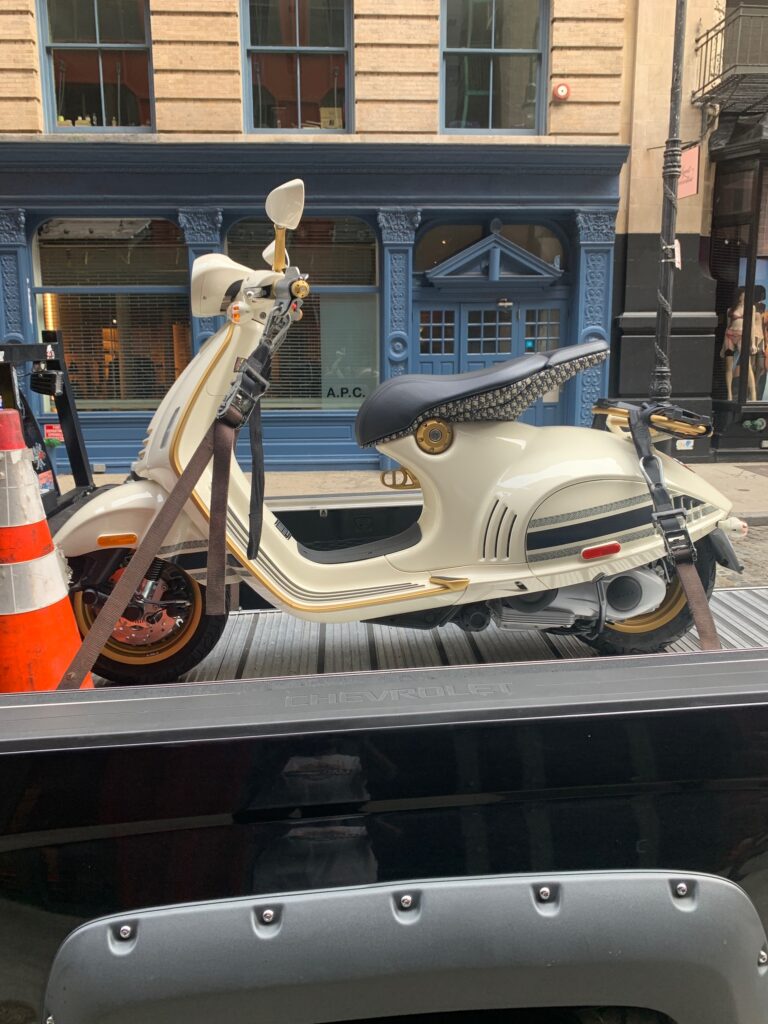
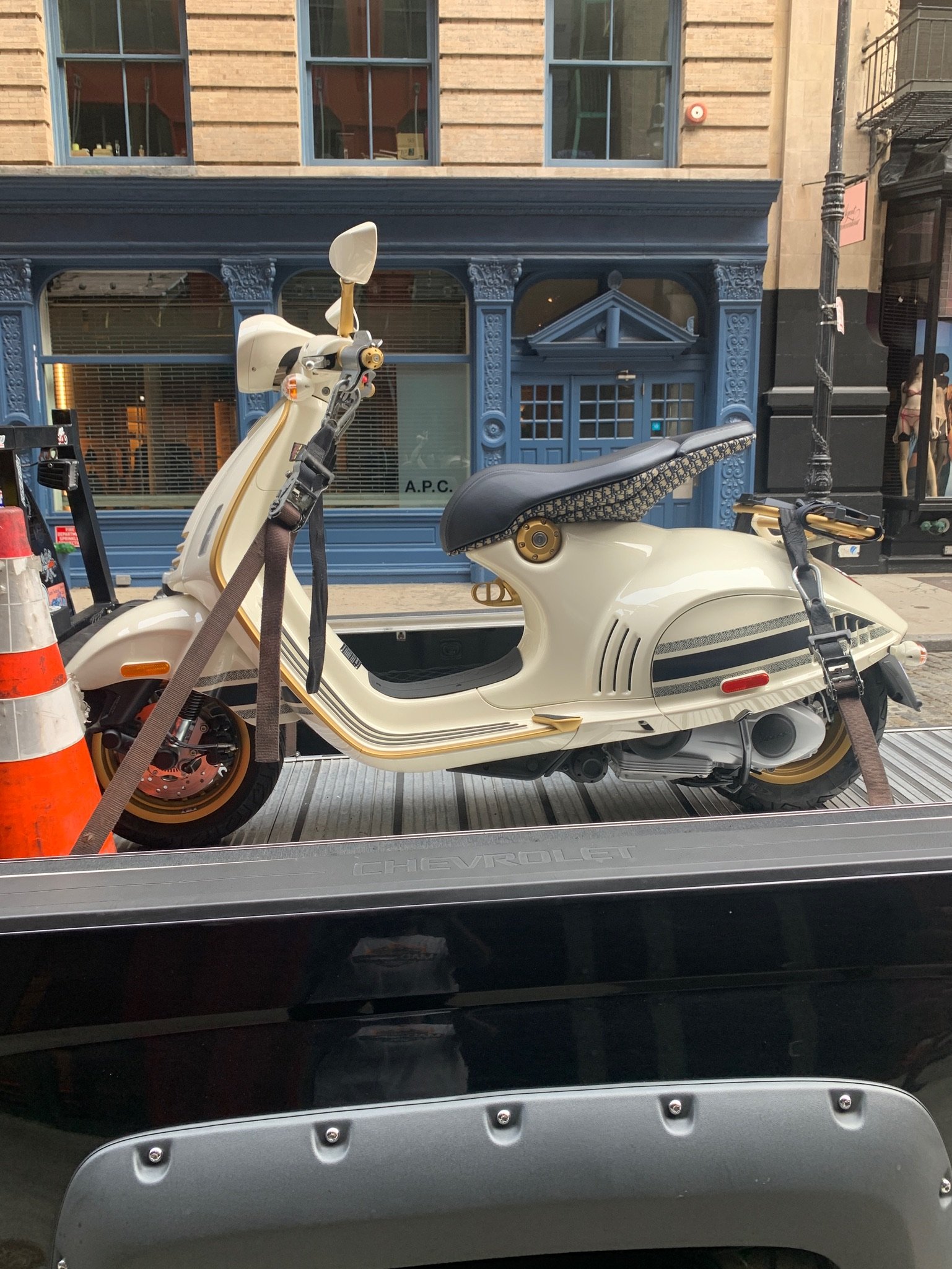
Mopeds are small, light, and easy to park, which is exactly why owners are sometimes caught off guard when one stops running. It seems like something you should be able to just push home or throw in the back of a friend’s car. In practice, moped towing goes much better when the bike is moved on a proper truck, secured the right way, and prepared before the driver arrives.
This guide is a practical checklist for moped owners in and around New York City. It covers what to do before the truck shows up, what to tell the towing company, and how a moped should be loaded and secured so it arrives without new scratches or cracked panels.
A quick note: MAD Transpo NYC specializes in motorcycles and motorsports vehicles. Moped towing is not listed as a separate service on its site, so if you need a moped moved, call to confirm availability for your specific machine and location.
Why mopeds need careful towing
A moped is not just a smaller motorcycle. Several things make it easy to damage during a careless move:
- Plastic bodywork. Many mopeds and scooters have large plastic panels that crack or scuff if a strap or chain sits on them.
- Small wheels and short wheelbases. They can tip more easily on a ramp or a moving deck if not secured well.
- Center stands. A bike resting on its center stand during transport can bounce off it and fall.
- Light weight. Light vehicles move around more under braking and turning if the straps are loose.
Putting a moped in a car trunk or the back of a van without proper tie-downs risks damage to the moped and the vehicle carrying it. A flatbed with soft straps and a wheel chock is the safer option.
Before you call: the basics to gather
Have these details ready so the towing company can give you an accurate answer about availability and price:
- Make, model, and year of the moped
- Gas or electric, since electric models may need different handling
- What is wrong: will not start, flat tire, crash damage, or just needs to be moved
- Whether it rolls and steers normally
- Pickup location, including whether it is on the street, in a building, or in a basement
- Destination, such as home, a shop, or storage
- Timing, and whether you are flexible
The moped towing prep checklist
Run through this list before the truck arrives. Most of it takes only a few minutes.
1. Take photos from every side
Photograph the moped from the front, back, both sides, and close up on any existing damage. This gives you a clear record of its condition before transport. Include a photo of the odometer if you can.
2. Find the keys and remove locks
A moped with a disc lock or chain still attached cannot be rolled. If the steering lock is engaged, the front wheel will not turn, which makes loading difficult. Have the ignition key ready and remove every lock you put on.
3. Clear out storage compartments
Many mopeds have under-seat storage or a top box. Remove helmets, bags, phone mounts, chargers, and anything loose. Items can shift and scratch the bodywork, and you do not want valuables going with the bike if you are not riding along.
4. Check fuel and leaks
If the moped is gas-powered, note whether fuel is leaking. If it went down, check under it for fluid. Tell the towing company about any leaks so the driver can plan for them.
5. Note anything loose or broken
A dangling mirror, a cracked panel, or a loose exhaust can catch on straps or fall off on the road. Tape down or remove loose pieces if it is safe to do so, and mention them to the driver.
6. Think about the battery
For gas mopeds, a dead battery is a common reason for a call. For electric mopeds, tell the company the battery type and whether it is removable. If the battery was damaged in a fall or is swelling, smoking, or hot, keep your distance and call 911 or the fire department rather than handling it yourself.
7. Clear the path
If the moped is in a hallway, courtyard, or basement, clear a path to the street. Know where the truck can stop safely. In dense neighborhoods, finding a spot the length of a flatbed can take a minute, so tell the company what the block is like.
8. Have paperwork handy
Keep your registration and insurance information accessible. If the moped is going to a repair shop for an insurance claim, have the claim number ready too.
How a moped should be loaded and secured
Whoever moves your moped, it is fair to ask how they will secure it. Good practice generally includes:
- Both wheels on a flat deck, rather than being dragged or lifted by one end
- A wheel chock to hold the front wheel in place
- Soft straps attached to solid frame points, handlebars, or fork, not looped over plastic panels
- The moped off its center stand and held upright by the straps, so it cannot bounce off the stand
- Even tension on both sides so the bike stays upright without crushing the suspension
MAD Transpo NYC describes its motorcycle setup as soft-tie straps at the triple tree, a front wheel chock, and nothing chained near the fairings. Those same principles apply to small bikes with lots of plastic.
When the moped arrives
The job is not quite done when the truck pulls up at the destination. A short check at drop-off protects you:
- Walk around the moped before the straps come off and compare it to your earlier photos.
- Watch it come off the deck and make sure it is set on its stand on firm, level ground.
- If it is going to a shop, confirm who received it and get a ticket or work order.
- Collect your keys, or confirm where they were left.
If anything looks different from your photos, mention it right away while the driver is still there.
Common moped towing mistakes
- Using ratchet straps over plastic. They crack panels easily.
- Leaving the moped on its center stand. It can bounce off and fall.
- Towing by the rear wheel only. Dragging a small bike can damage the drivetrain and bodywork.
- Not mentioning crash damage. A bent fork or locked wheel changes the loading plan.
- Moving an electric moped with a damaged battery. Treat a damaged lithium battery as a safety issue first.
When to tow and when to ride or push
For a short distance on a quiet street, pushing a running-but-unrideable moped home may be fine. But a tow is the better choice when:
- The destination is more than a few blocks away
- The route includes busy roads, bridges, or hills
- The moped is damaged or will not roll freely
- It is dark, cold, or raining
- You do not have a license or permit that covers riding it
The cost of a proper tow is usually small compared to the cost of new bodywork or an injury from pushing a bike in traffic.
Frequently asked questions
Can a moped be towed on a regular tow truck?
It can be moved on a flatbed with soft straps and a wheel chock. Avoid methods that lift or drag one end of the moped, as these can damage the bodywork and drivetrain.
Should I remove the battery from my electric moped before towing?
Ask the towing company first. If the battery is removable and undamaged, they may ask you to remove it or leave it in place. If it is damaged, swelling, or hot, keep away and call 911.
Does MAD Transpo NYC tow mopeds?
MAD Transpo NYC specializes in motorcycles and motorsports vehicles, and moped towing is not listed as a separate service on its site. Call 929-265-0526 to ask whether it can move your specific moped.
How do I keep my moped from getting scratched during transport?
Take photos first, remove loose items, and make sure straps attach to solid frame points rather than plastic panels. Ask the driver how they plan to secure it.
Need a small bike moved?
If you have a moped, scooter, or motorcycle that needs to be moved in the New York City metro area, call MAD Transpo NYC at 929-265-0526 to confirm whether your machine is a fit. Dispatch is available 24/7. You can also share details through the MAD Transpo contact page or review the full list of towing and transport services.