
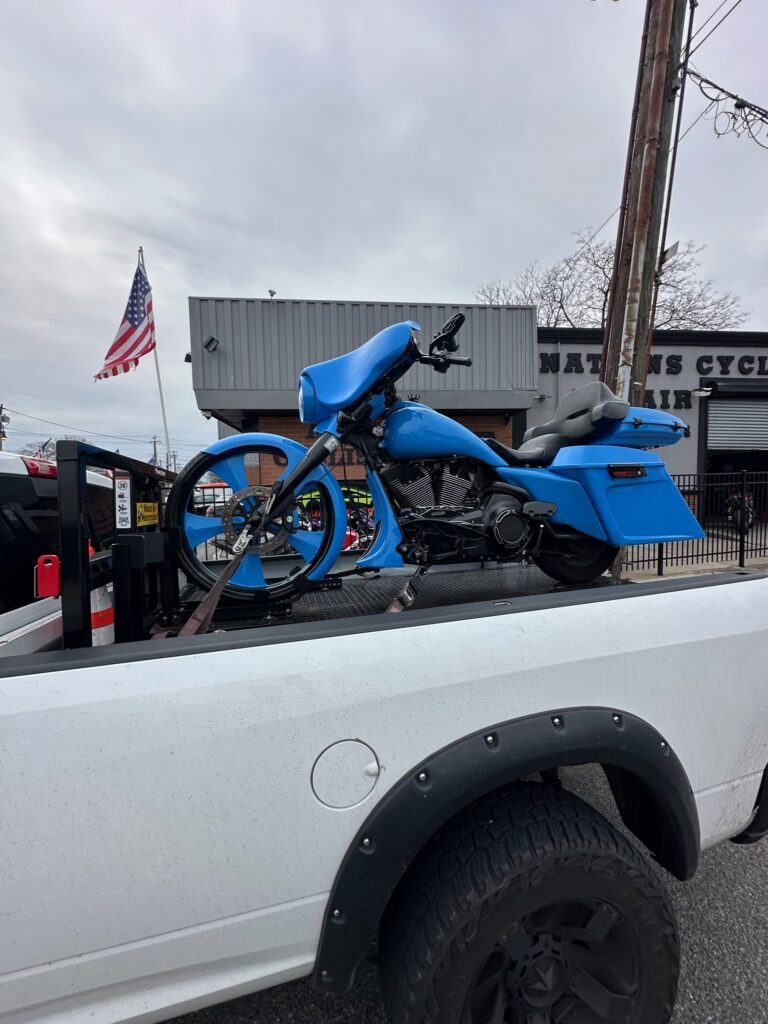
Motorcycle roadside assistance in New York City begins with protecting the rider from traffic, not diagnosing the machine beside the road. A dead battery, puncture, broken control, overheating warning, or fuel problem may sound simple, but the street environment can turn a minor failure into an unsafe scene. Move yourself to a protected location when possible, call emergency services for immediate danger or injury, and give the assistance provider precise location and condition details.
Make the scene visible without standing in danger
If the motorcycle can coast to a legal curb or protected shoulder without creating more risk, do so. Turn on hazard lights if equipped and safe to use. Do not push a heavy motorcycle across moving lanes, stand behind it in traffic, or attempt a repair where drivers cannot see you. A warning triangle or light can help only when it can be placed without entering danger.
On a bridge, tunnel, expressway, or other controlled roadway, follow posted emergency procedures and instructions from the facility operator or authorities. Your first call may need to be 911 or the roadway’s emergency number rather than a private transport service.
Pinpoint the motorcycle, not your billing address
Share the road, direction of travel, nearest cross street or exit, borough, and a visible landmark. A phone location pin is useful, but verify that it landed on the correct side of a divided road. Mention whether the bike is in a garage, loading zone, narrow shoulder, ramp, or traffic lane and whether police or facility staff are present.
Keep the phone charged and answer unknown calls during dispatch. If you move to a safer waiting place, tell the provider where the motorcycle remains and where you will meet.
Motorcycle roadside assistance needs a movement report
Say whether the motorcycle starts, rolls, steers, holds air, and has usable brakes. Describe visible damage, leaks, smoke, odor, warning lights, and any locked wheel. Give the make, model, color, and plate when appropriate. A flat rear tire on a rolling bike is different from crash damage that prevents steering.
Avoid repeated starting when the bike is overheating, leaking fuel, making severe mechanical noise, or displaying a critical warning. Do not open a hot cooling system. The goal of the call is safe recovery, not proving that the motorcycle can move under its own power.
Dead battery or charging failure
A battery symptom can come from age, loose connections, a charging-system problem, or something left on. A jump may start the engine without resolving the cause. If the motorcycle stalls again, lights fluctuate, or the charging warning remains, transport to a mechanic may be more appropriate than continuing through traffic.
Use only a jump method approved for the motorcycle and equipment. Incorrect connections can damage electronics or cause injury. When in doubt, wait for trained help and tell the technician what happened before the battery died.
Puncture, tire damage, or wheel problem
A visibly damaged, deflated, or displaced tire should not be ridden simply to reach a shop. Temporary repair products have specific limits and may not suit the damage, tire, or motorcycle. A bent wheel, damaged valve, sidewall injury, or unknown pressure loss calls for professional assessment.
Tell dispatch which tire is affected and whether the bike rolls. If the tire has left the rim or the wheel is locked, special loading may be needed. Keep the motorcycle upright only if doing so is safe and stable.
Broken controls, chain trouble, and leaks
A failed clutch or brake control, loose chain, damaged belt, broken shifter, or fluid leak can make the motorcycle unsafe even if the engine runs. Photograph the condition without reaching near hot or moving parts. Do not improvise a control with wire or continue riding with uncertain braking.
Fuel odor or visible fuel requires distance from ignition sources and may justify emergency assistance. Tell the dispatcher explicitly about the leak so the response can be planned safely.
Choose a destination before the truck arrives
Call the intended mechanic or dealership to confirm it is open and can accept the bike. If it is closed, identify a lawful storage or home destination rather than deciding at the curb. The receiving location should have a reachable unloading point and an authorized person.
MAD Transpo NYC lists 24/7 towing, transportation, and roadside assistance for motorcycles and other motorbikes in the New York City metropolitan area. A complete request includes the exact scene, movement report, and confirmed destination.
What to keep in a compact roadside kit
- Charged phone and small power bank.
- Emergency contacts and insurer information.
- High-visibility item that can be used without entering traffic.
- Motorcycle-specific basic tools you know how to use.
- Tire gauge and manufacturer-approved supplies.
- Water and weather layer appropriate to the season.
A kit supports judgment; it does not make a dangerous roadside repair safe. Leave the scene and call emergency help when exposure to traffic is the greater threat.
After a minor collision, do not let appearance decide
A motorcycle can look rideable while a lever, wheel, fork, control, or mounting point has been compromised. Follow police and medical guidance, document the scene when safe, and avoid riding until the machine is properly assessed. Transport it to a qualified destination and tell the provider about visible damage, fluid, loose parts, and whether either wheel turns.
Collect detached pieces only when they can be reached safely. Keep them with the motorcycle in a labeled container for the technician or insurer. Do not straighten a control or wipe away evidence simply to make loading easier without discussing it.
Waiting safely is part of the response
Tell dispatch what clothing and shelter you have, especially during heat, cold, or precipitation. Move to a protected public place when authorities say the motorcycle can remain and provide the updated meeting point. Do not sit on the bike in a shoulder or stand between it and approaching traffic.
If another rider waits with you, that person should park legally rather than creating a second roadside hazard. Share one contact number with dispatch to avoid conflicting location updates. When the truck is close, let the operator decide the safest approach and loading position.
Roadside communication should stay factual
Send one concise update when the location or condition changes. Repeated calls from several friends can split dispatch information and delay the response. If police move the motorcycle or direct it to another area, report the new location immediately and say who authorized the move.
After recovery, close the loop
Confirm that the destination accepted the bike and key. Save the incident notes with the service record and tell the mechanic about any roadside jump, temporary inflation, unusual sound, or warning display. Replace used kit supplies before the next ride rather than discovering the empty package during another breakdown.
Do not abandon the key plan
If the rider leaves by ambulance or another vehicle, tell a trusted person and responders where the key is. Do not hide it on the motorcycle. The recovery provider needs legitimate access, and the destination needs to know who receives it. Record the handoff when circumstances allow.
Pets, passengers, and personal property
Roadside motorcycle transport generally solves the motorcycle’s movement, not every accompanying need. Arrange safe travel for passengers and animals separately. Remove valuables and unsecured luggage, and ask before expecting the provider to carry helmets or gear.
For non-emergency motorcycle recovery in the New York City area, contact MAD Transpo NYC with your precise location, the bike’s movement condition, and a confirmed delivery point.