
A flat tire is one of the most common reasons riders end up on the side of the road. On a car, it is an inconvenience. On a motorcycle, it can be a real safety problem, because the bike depends on just two small contact patches to stay upright and stop. When a tire goes soft, the decision you make next matters: plug it, inflate it, or call for motorcycle road service and a tow.
This guide walks through that decision step by step. It is general information, not a repair manual. Your bike’s owner’s manual and your tire manufacturer’s guidance always come first.
First: get the bike and yourself safe
If you feel the bike wobble, pull, or feel heavy in the steering, a tire may be losing air. Do not brake hard or swerve. Ease off the throttle, signal, and roll gently to a safe spot away from traffic.
- Choose a wide shoulder, a parking lot, or a side street over a narrow highway edge.
- Turn on your hazards if they work.
- Stand away from traffic, behind a barrier if possible.
- Call 911 if you crashed, if someone is hurt, or if the bike is blocking a lane.
Only once you are safe should you start looking at the tire.
Step 1: Figure out what kind of flat you have
Not all flats are equal. A quick look helps decide what to do next.
A slow leak from the tread
A nail, screw, or small object in the center of the tread often causes a slow leak. The tire may still hold some air. This is the type of puncture riders most often consider plugging.
Damage to the sidewall or shoulder
Cuts, bulges, or punctures in the sidewall or near the edge of the tread are a different story. These areas flex constantly, and many tire makers advise against repairing them. A tire with this kind of damage generally should not be ridden.
A sudden loss of air
If the tire went flat quickly, the damage may be larger than it looks, or the bead may have come off the rim. Riding on it can damage the wheel and is unsafe.
Tube-type tires
Many older bikes, some cruisers, and bikes with spoked wheels use inner tubes. Tube-type tires generally cannot be fixed with a standard tubeless plug. Repairing a tube usually means removing the wheel, which is hard to do on the roadside.
Step 2: Should you plug it?
A tubeless plug kit is a common item in a rider’s kit, and it can get you moving in the right situation. Before you use one, consider:
- Is the bike tubeless? Plugs are for tubeless tires. Check your manual or the tire sidewall if you are unsure.
- Is the puncture in the center of the tread? Sidewall and shoulder damage usually is not a candidate for a plug.
- Is the hole small? Larger cuts and tears are beyond what a roadside plug is designed to handle.
- Do you know how to do it? If you have never used a plug kit, the side of a busy road is a hard place to learn.
Many tire manufacturers consider a roadside plug a temporary fix only. Even if it holds, ride gently and at reduced speed directly to a shop, and have the tire inspected or replaced. Follow your tire maker’s guidance on whether a plugged tire can be ridden and for how long.
Step 3: Can you just add air?
If the tire is low but not flat, and you cannot find a puncture, adding air might be enough to reach a nearby shop or gas station. A small compressor or CO2 cartridges can help. Check pressure with a gauge and inflate to the level listed in your owner’s manual or on the bike’s label.
Watch the tire after you inflate it. If it loses pressure again quickly, there is likely a leak, and riding further is a gamble.
Front flat vs. rear flat
Which tire goes flat changes how the bike feels and how risky it is to keep moving.
Front tire
A front flat often shows up as heavy, vague, or wobbly steering. The front tire does most of the work in braking and steering, so a soft front can make the bike hard to control. Do not try to ride any real distance on a soft front tire.
Rear tire
A rear flat may feel like the back of the bike is sliding, weaving, or wallowing in turns. It can feel less dramatic at first, but it still affects stability and braking. Riding on a flat rear can quickly damage the tire and wheel.
In both cases, the safest move is to slow down gradually and stop somewhere safe.
What to keep in your flat-tire kit
If you ride regularly, a small flat-tire kit is worth the space. Common items include:
- A reliable tire pressure gauge
- A tubeless plug kit, if your bike has tubeless tires
- A small compressor or CO2 cartridges with an adapter
- Gloves and a small light for night stops
- Your road service number saved in your phone
Practice using your plug kit at home on an old tire if you can. Knowing the steps makes a roadside repair much faster and safer.
Step 4: When to call motorcycle road service and a tow
A tow is the safer call in many flat-tire situations, including when:
- The damage is in the sidewall or shoulder of the tire.
- The tire lost air suddenly or came off the rim.
- The bike has tube-type tires.
- You do not have a plug kit or air source, or are not comfortable using them.
- You are on a highway or bridge with no safe place to work.
- It is dark, raining, or cold, making repairs harder and riding riskier.
- The plug did not hold, or the tire keeps losing pressure.
- Both tires are affected, or you are unsure what is wrong.
Riding on a flat tire can damage the rim, the brake components, and the tire itself, and it raises the risk of a crash. If you are not sure the tire is safe, do not ride it.
What to tell road service about a flat
When you call for help, give specific details so the right truck and plan are sent:
- Your exact location, including direction of travel and nearest exit or cross street
- Which tire is flat, front or rear
- Whether the bike still rolls, or if the tire is off the rim
- Whether the bike has tubeless or tube-type tires, if you know
- Where you want the bike taken, such as a tire shop or your home
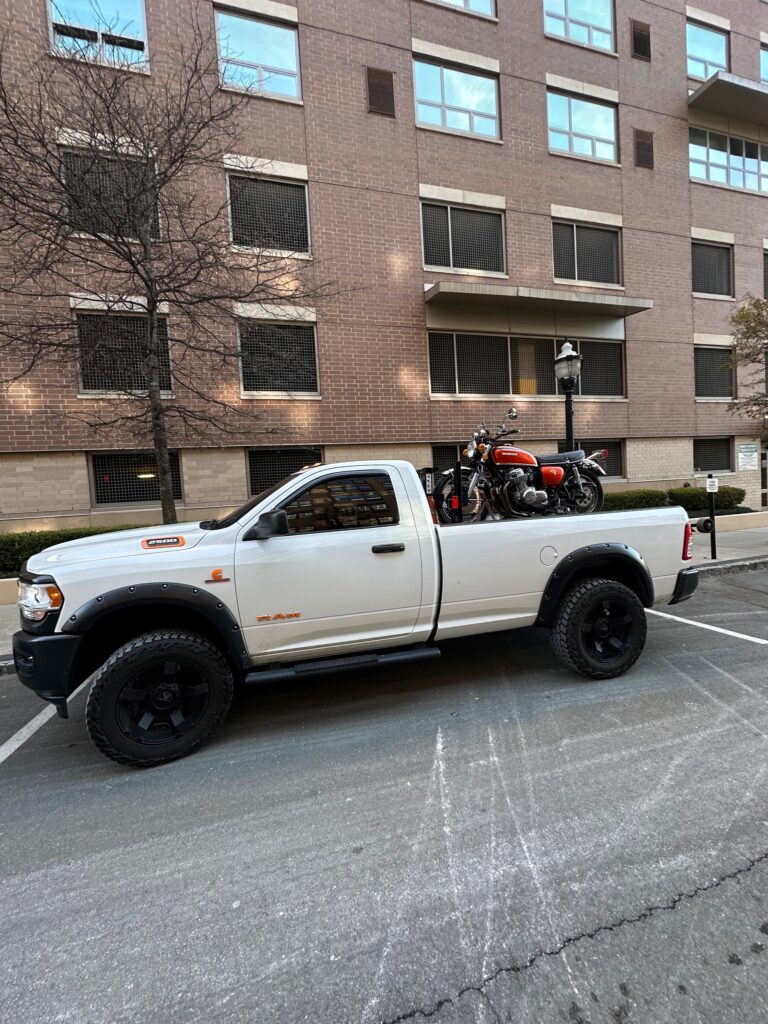
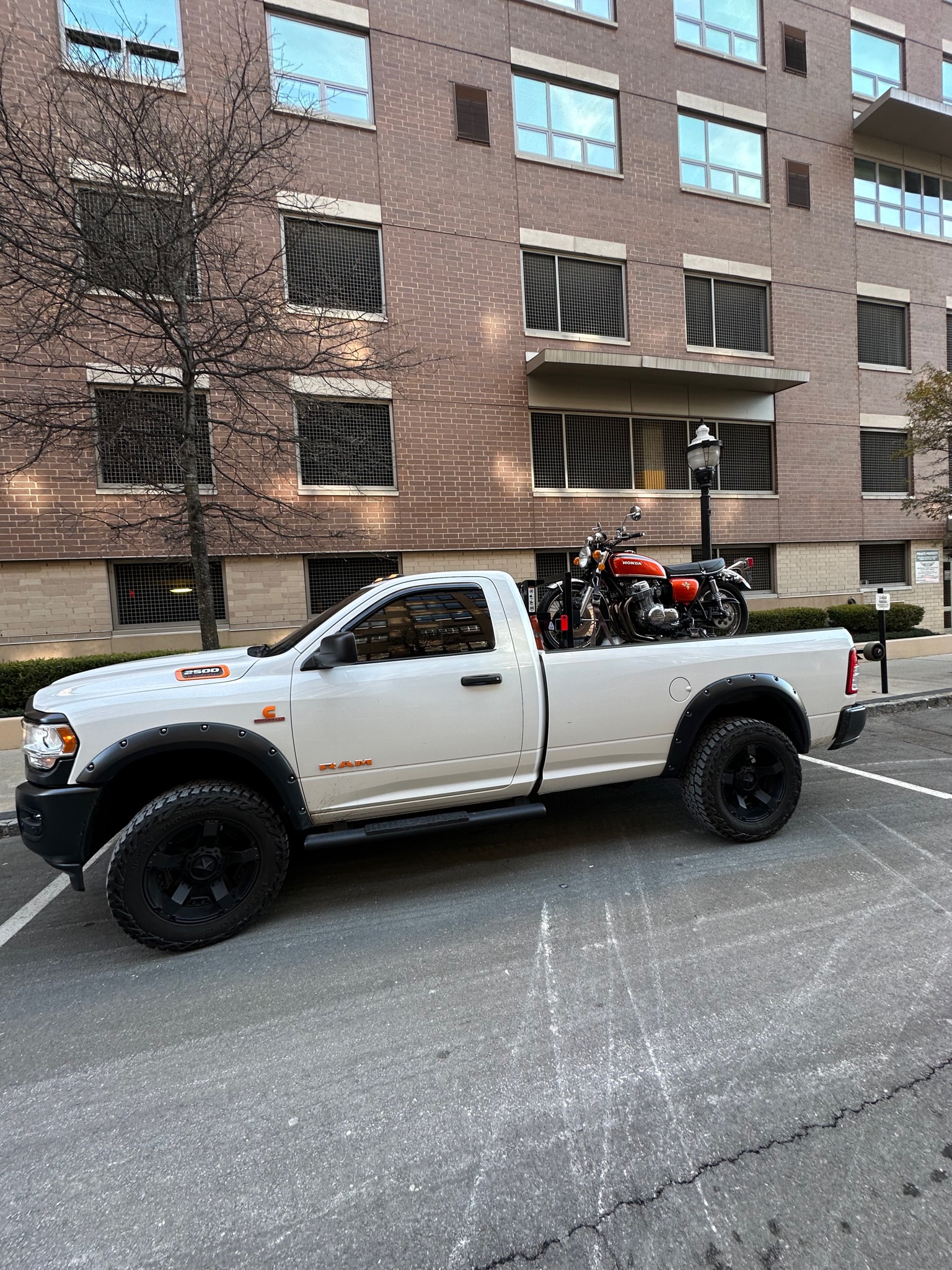
A bike with a flat tire may be harder to roll onto a flatbed, so let dispatch know so they can plan loading.
Where should the bike go?
For a flat, the best destination is usually a shop that can repair or replace motorcycle tires. Call ahead to confirm they have your size in stock or can order it, and check their hours. If the shop is closed, the bike can go home first and to the shop later.
Preventing flats before they happen
You cannot avoid every nail on the road, but a few habits lower your risk:
- Check tire pressure regularly, especially as temperatures change.
- Look over your tires before longer rides for cuts, embedded objects, and wear.
- Replace tires that are worn, cracked, or past the age your tire maker recommends.
- Avoid riding through construction debris and road edges where sharp objects collect.
- Carry a gauge and, if you know how to use it, a plug kit and air source.
Frequently asked questions
Can I ride on a plugged motorcycle tire?
Many tire makers treat a roadside plug as a temporary repair. If you plug a tire, ride gently and directly to a shop, and follow your tire manufacturer’s guidance.
Can you plug a motorcycle tire with an inner tube?
Generally, no. Standard plugs are for tubeless tires. Tube-type tires usually need the wheel removed to repair or replace the tube.
Is it safe to ride a motorcycle with a slow leak?
It is risky. Low pressure affects handling and braking. If the tire keeps losing air, call for road service rather than riding.
Will a tow truck pick up a motorcycle with a flat tire?
Yes, a flatbed can carry a motorcycle with a flat. Tell dispatch about the flat so they can plan how to load the bike.
Flat tire? Call MAD Transpo NYC
If a flat leaves you stuck anywhere in the New York City metro area, MAD Transpo NYC dispatch is available 24/7 at 929-265-0526. You can also reach the team through the MAD Transpo contact page or review all roadside and towing services.