
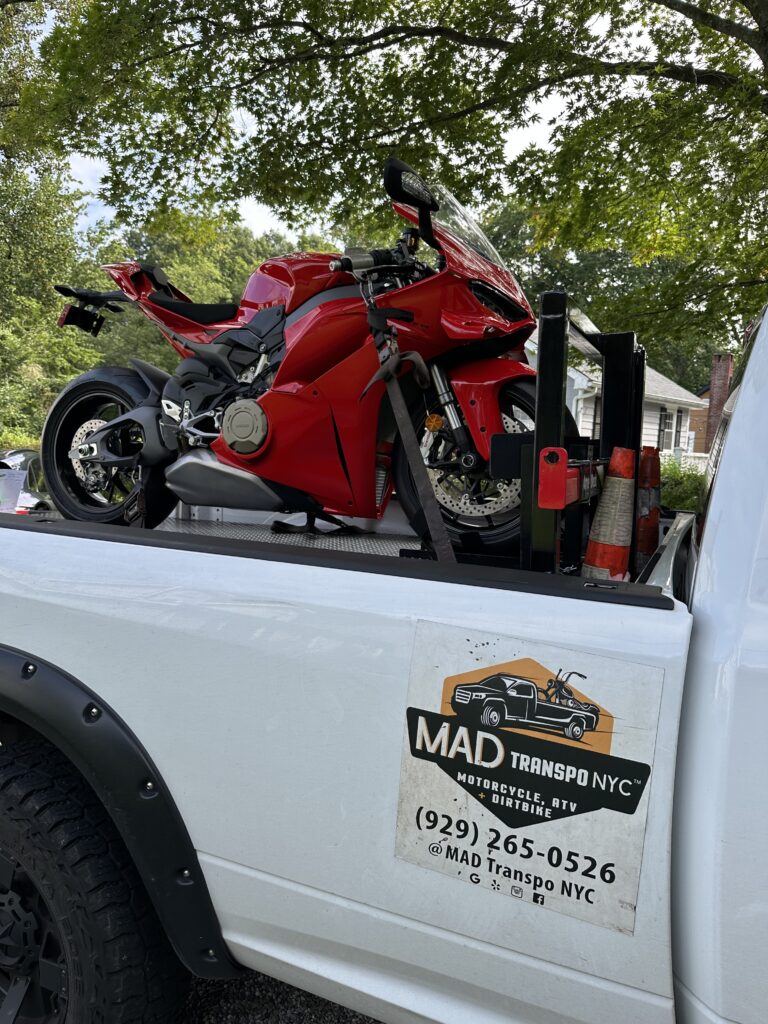
Moto transportation in New York City is less about highway mileage than it is about the handoffs at each end. A motorcycle may need to leave a narrow garage, cross a busy neighborhood, and arrive during a dealership’s receiving window. Riders who share those details early get a plan built around the actual bike and location, not an optimistic map estimate.
The curb is often the hardest part
Picture a pickup on a residential block at 8:30 a.m. The legal loading space that looked open the night before may now be occupied by deliveries, school traffic, or street-cleaning activity. The owner should identify a workable meeting point and confirm whether the motorcycle can be rolled there. A loading crew cannot safely improvise in a bus lane, crosswalk, hydrant zone, or moving lane because the original curb space disappeared.
Garage pickups bring different questions. Note the ceiling height, ramp slope, gate hours, tight corners, and whether the bike is on a mechanical parking platform. If the engine cannot run, say whether the wheels turn and the steering unlocks. Those facts determine whether the motorcycle can be moved through the building without forcing it or blocking other residents.
What the first condition check should cover
A useful walkaround is brief but specific. Photograph both sides, the front and rear, the instrument area, and any existing scratches. Check tire inflation, loose bodywork, leaking fluids, and detachable accessories. Handlebars, tall windscreens, side cases, aftermarket exhausts, and low fairings can change the loading clearance. If an alarm or immobilizer is active, explain how to disarm it before anyone touches the bike.
Keys deserve their own plan. Mark the ignition key, remove unrelated house or office keys, and decide who receives it. Registration, repair orders, toll notices, and sales documents should travel with the owner or recipient rather than in an exposed bag. A photo of the odometer and fuel level closes the record without turning the handoff into paperwork theater.
Moto transportation equipment should match the motorcycle
The right setup supports the bike at stable points and keeps suspension compression reasonable. A wheel chock, suitable ramp or lift, and correctly placed soft loops or straps are more important than the number of straps visible in a photo. Tie-downs should not crush brake lines, wiring, painted panels, or delicate controls. Vintage motorcycles, trikes, Can-Am vehicles, dirt bikes, and machines with unusually low clearance may require a different loading geometry from a standard street bike.
Ask how a non-running motorcycle is handled and whether the transport vehicle can reach the pickup surface. A truck that works on a wide commercial lot may not fit under a garage lintel. MAD Transpo NYC states that it transports motorcycles and other motorbikes across the New York City metropolitan area, including vintage and classic motorcycles, ATVs, trikes, Can-Am vehicles, and dirt bikes. That stated range makes the exact vehicle description worth sharing at the first contact.
Timing is a chain, not a single appointment
A practical schedule includes access at origin, loading time, city traffic, unloading space, and acceptance at the destination. A mechanic may close its intake desk before the service department closes. A storage facility may require the account holder to be present. A tow pound may have release procedures that must be completed before the motorcycle can leave. Build around the narrowest window, then add breathing room rather than making every step depend on perfect traffic.
Weather can change that chain. Heavy rain affects grip on ramps and visibility around the truck; wind may make loose covers dangerous; winter residue can make surfaces slick. The useful response is not a dramatic cancellation rule but early communication. Confirm whether the pickup remains safe, remove loose fabric, and keep the recipient informed if conditions change the arrival estimate.
Delivery should be as deliberate as pickup
Before departure, confirm the destination address, entrance, receiving person, and phone number. At delivery, choose a legal, level area where the bike can be unloaded without crossing live traffic. Repeat the walkaround before the motorcycle is moved into a garage or service bay. If the recipient sees a concern, document it while everyone can still view the bike and its unloading position.
The motorcycle should not be left with an unauthorized person merely because the planned contact is late. Agree in advance on what happens if a shop closes, a building desk refuses access, or the owner cannot answer. A backup contact or a revised appointment is safer than abandoning the original chain of custody.
A rider-ready booking note
A clear request can fit in one message: motorcycle year, make and model; whether it starts, rolls, steers, and holds air; exact pickup and destination; access restrictions; preferred window; recipient; and the reason for the move. Add photos when modifications or damage are hard to describe. That note gives a transport provider something concrete to evaluate and gives the rider a record of what was disclosed.
Expect questions in return. The provider may need to know about locks, keys, wheelbase, ground clearance, loose parts, or appointment rules. Answering those questions is not unnecessary friction. It is the work that turns a vague request into a safe New York motorcycle move.
A realistic handoff from a brownstone block
Suppose the motorcycle is parked behind a narrow gate in Brooklyn and must reach a Manhattan service department by noon. The owner first confirms that the gate opens fully and that the bike can roll to the curb. They send a photo showing the path, reserve no-parking access only through lawful channels, and tell the shop which service entrance will receive the machine. On pickup morning, the key is separate from the owner’s house keys, loose luggage is removed, and a neighbor’s car is not assumed to move.
The transporter arrives to a known condition: the motorcycle starts but has an intermittent clutch problem, both tires hold air, and the steering is free. Everyone agrees that it will not be ridden onto the equipment. At the destination, the named service adviser accepts the key and notes the existing mirror scrape shown in the pickup photographs. Nothing about this example is dramatic. Its strength is that each small uncertainty was settled by the person who controlled it.
Questions that deserve a direct answer
Can the owner send the key with the driver? Yes, when that is part of the agreed handoff, but unrelated keys and private access devices should be removed. Should the fuel tank be empty? Follow the transporter’s instructions and the motorcycle manual; do not drain fuel casually. Can accessories stay on? Only after the provider knows about them and confirms they can be secured without damage. Will the transporter enter a private garage? Access depends on clearance, permission, and the specific equipment, so provide measurements and ask before the appointment.
One detail to settle before dispatch
Ask who makes the final call if the original curb or entrance is unavailable. Giving that authority to a reachable owner or building contact prevents the driver from choosing an unapproved location. The alternate should be legal, close enough to use, and known to the recipient.
If you are arranging a motorcycle move in the New York City metropolitan area, send the bike condition, access details, addresses, and timing to MAD Transpo NYC so the team can assess the actual pickup and delivery rather than guess from mileage alone.