
When your bike stops on the side of the road, the call you make next does a lot of the work. Motorcycle roadside assistance goes faster and smoother when the dispatcher knows exactly where you are, what you ride, and what went wrong. Missing details mean follow-up calls, the wrong equipment, or a driver circling the block looking for you.
This guide is a practical script for that call. Save it, screenshot it, or keep a short version in your phone notes. It works whether you are on a side street in Queens, a shoulder on the Belt Parkway, or a parking lot outside the city.
Before you call: get safe first
Nothing on this list matters more than your safety. Before you dial for motorcycle roadside assistance:
- Move yourself away from traffic, behind a barrier or onto the sidewalk if you can.
- Turn on your hazards if the bike’s electrics still work.
- Call 911 first if anyone is injured, if there was a crash involving another vehicle, or if the bike is blocking a travel lane.
Once you are safe, take a breath and gather the details below. A calm, complete call is faster than a rushed one.
1. Your exact location
This is the single most important detail. In New York, “on the BQE” or “near Prospect Park” can mean miles of road.
On a city street
- Street address or the nearest cross streets
- Which side of the street the bike is on
- A landmark the driver will see, like a corner store, school, or gas station
On a highway or parkway
- Road name and direction of travel, for example, “FDR southbound”
- Nearest exit or the last exit you passed
- Whether you are on the right shoulder, left shoulder, or an exit ramp
- Any mile marker or overpass you can see
If your phone can share a map pin, offer to send it. It removes most of the guesswork.
2. What you ride
The motorcycle itself determines what equipment and deck space the driver needs. Give:
- Year, make, and model, for example, a recent Honda naked bike, a Harley touring bagger, or a vintage Triumph
- Body style, such as sport, cruiser, touring, adventure, or dirt bike
- Anything unusual, such as a trike, a Can-Am Spyder or Ryker, a sidecar, or heavy luggage
Three-wheelers and wide touring bikes in particular need the right deck width and tie-down points, so mention them up front.
3. What happened and what the bike is doing now
Describe the problem in plain words. You do not need to diagnose it. What helps the dispatcher most is knowing the bike’s current state:
- Does it start? Clicks, cranks slowly, cranks but will not fire, or nothing at all
- Does it roll? Can you push it, or is a wheel locked, a tire flat, or the chain off
- Did it go down? If it tipped over or slid, mention bent levers, pegs, or a damaged front end
- Any warning lights, smoke, smells, or leaks?
For example: “It died at a light, now it cranks but won’t start. It rolls fine. No damage.” That one sentence tells the dispatcher a lot.
4. Where the bike needs to go
Motorcycle roadside assistance sometimes ends with the bike running again. Often it ends with a tow. Have an answer ready for where you want the bike taken if it cannot be fixed on the spot:
- Your home or building garage
- A specific repair shop or dealership, with its address
- A storage facility
If the shop is closed at night, ask whether the bike can go home first and to the shop later, or whether the shop has an after-hours drop option. Deciding this before the truck arrives avoids a second trip.
5. Access details at the pickup spot
Some pickups are easy. Others have obstacles the driver needs to know about:
- Is the bike in a garage, lot, or behind a gate?
- Are there stairs, ramps, or narrow paths?
- Is there room for a truck to stop safely next to the bike?
- Are there locks on the bike, and do you have the keys?
MAD Transpo NYC specifically asks riders to mention non-running or damaged vehicles and pickups from garages, basements, or tight-access storage so the crew can plan the right equipment and approach.
6. Your contact and timing
Finally, give the basics that keep everyone connected:
- Your name and a phone number that will stay on
- Whether you will stay with the bike or need to leave
- How long you can safely wait where you are
If you have to leave the bike, for example because it is late and the location is not safe to wait in, tell the dispatcher. They can advise on what to do with the keys and how to confirm pickup.
A sample motorcycle roadside assistance call
Put it all together and the call sounds something like this:
“Hi, I need roadside help for my motorcycle. I’m on the Belt Parkway eastbound, right shoulder, just past the last exit I saw. It’s a black Harley touring bike. It lost power and now it cranks but won’t start. It rolls fine, no damage. If it can’t be fixed here, I’d like it taken to my shop in Brooklyn, or home if the shop is closed. I’m standing behind the barrier. My number is the one I’m calling from.”
That takes less than a minute and answers almost every question the dispatcher would ask.
Common mistakes that slow down roadside help
Even experienced riders make these on a stressful day:
- Giving a neighborhood instead of a location. “Somewhere in Astoria” sends a driver searching.
- Leaving out damage. A bent front end or locked wheel changes how the bike is loaded. Mention it even if it seems minor.
- Forgetting the destination. Deciding where the bike goes after the truck arrives costs time for everyone.
- Letting the phone die. Drivers often call when they are close. Lower your screen brightness and keep the phone warm in cold weather.
- Trying to push the bike along a highway shoulder. It is tiring and dangerous. Stay put in a safe spot unless you are directed otherwise.
Keep a roadside card in your phone
Stress makes it hard to remember details. A simple note in your phone helps:
- Your bike’s year, make, model, and plate
- Your insurance company and policy number
- Your preferred repair shop’s name and address
- A 24/7 motorcycle roadside assistance number
- Any quirks, like “kickstand weak” or “aftermarket exhaust, low clearance”
If you ride with others, share the same note with them so anyone can make the call if needed.
What happens after you call
Once dispatch has your details, a driver is assigned and heads your way. Stay reachable, keep your phone charged, and watch for the truck. When it arrives, confirm the destination with the driver, mention anything about the bike that changed since you called, and stay clear while it is loaded. Take a couple of quick photos of the bike before it goes on the truck so you have a record of its condition.
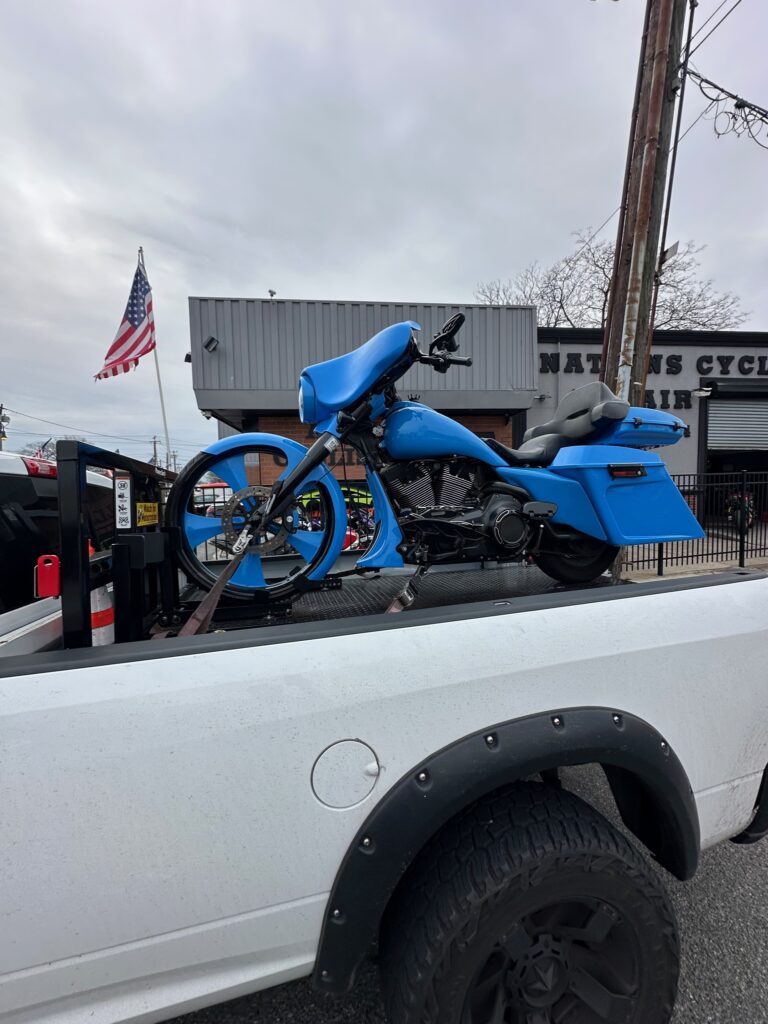
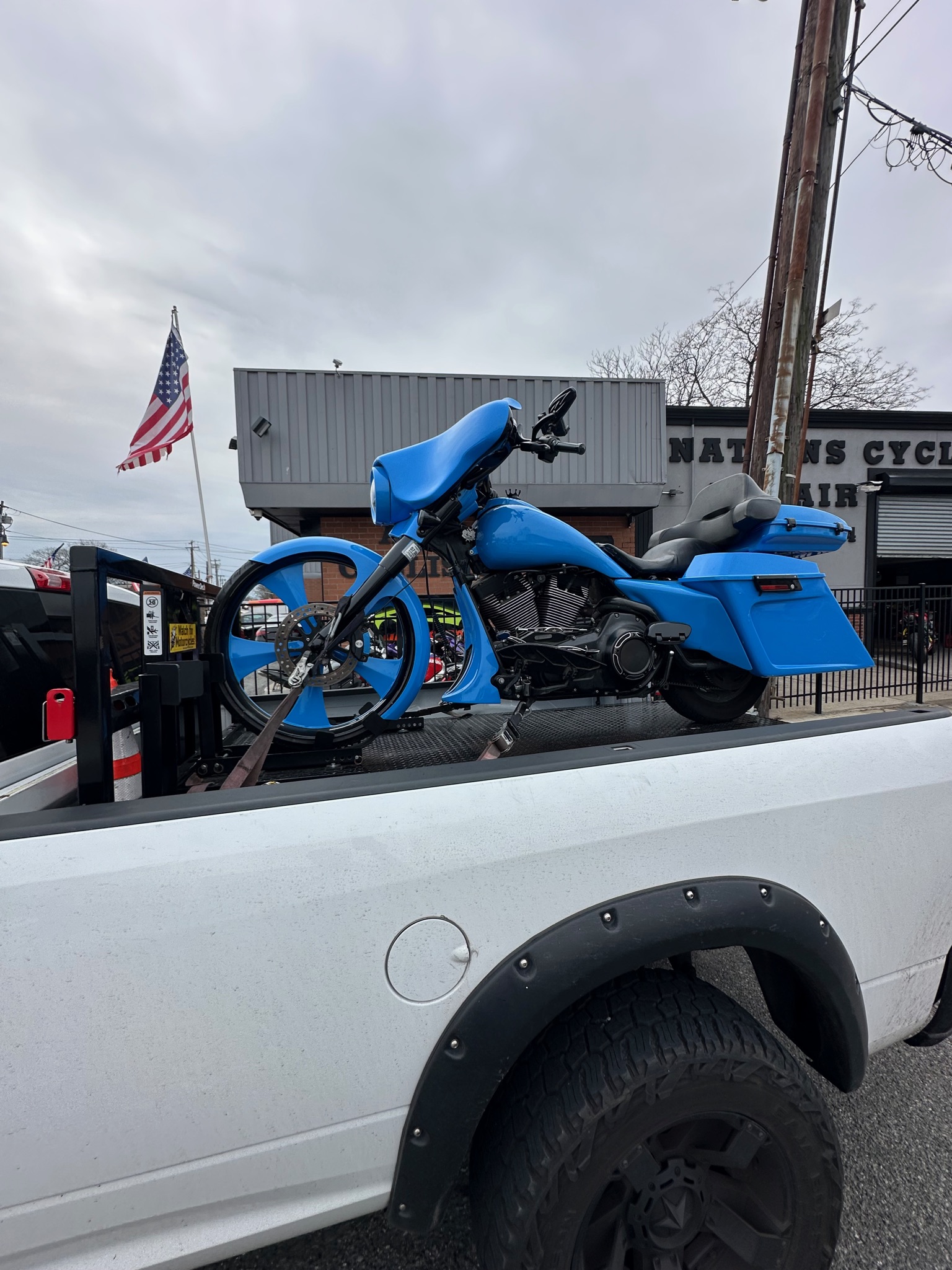
With MAD Transpo NYC, bikes ride on a flatbed with soft-tie straps at the triple tree, a front wheel chock, and nothing chained near the fairings.
Frequently asked questions
What information do I need when calling motorcycle roadside assistance?
Your exact location, the bike’s year, make, and model, what happened and whether the bike starts and rolls, where you want it taken, any access issues, and a phone number that will stay on.
Should I call 911 or roadside assistance first?
Call 911 first if anyone is hurt, if another vehicle was involved in a crash, or if the bike is blocking traffic. Call roadside assistance once everyone is safe.
Can I leave my motorcycle and have it picked up later?
Sometimes, depending on where it is and how safe the location is. Tell the dispatcher your situation and follow their guidance on keys and confirmation.
Does MAD Transpo NYC handle roadside calls at night?
Yes. MAD Transpo NYC dispatch is live 24/7 for urgent pickups across the New York City metro area, and the company asks riders with urgent roadside needs to call directly rather than use the online form.
Save the number before you need it
The best time to prepare for a roadside call is before you are on the shoulder. Save MAD Transpo NYC’s dispatch number, 929-265-0526, in your phone today. For non-urgent pickups, use the MAD Transpo contact page, and see the full list of roadside assistance and towing services.