
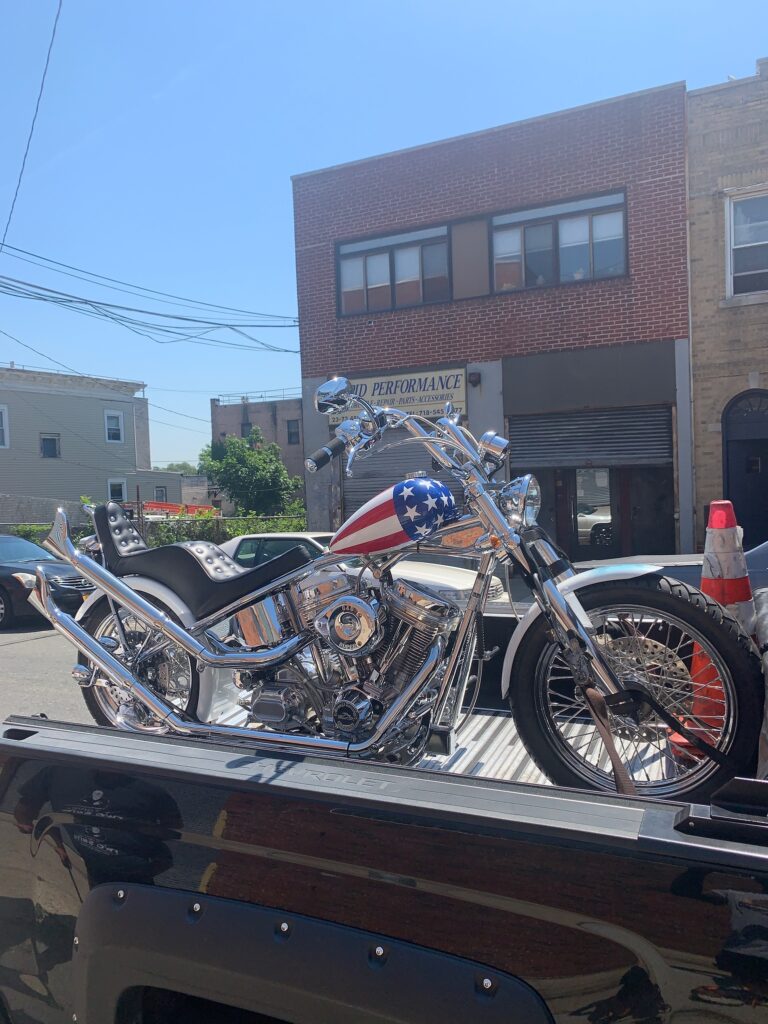
A useful Motorcycle transport quote request reads like a compact dispatch sheet. It tells the provider which motorcycle is moving, how it can be handled, where the truck can reach it, who controls the handoff, and when the destination will accept it. Gathering those answers before requesting prices prevents different providers from quoting different imaginary versions of the trip.
Section one: identify the motorcycle
- Year, make, model, and motorcycle type.
- Approximate weight or major dimensions when known.
- Side cases, tall screen, custom bars, lowered suspension, sidecar, trike conversion, or other modification.
- Current location and clear photos from both sides.
Use the model name shown on the paperwork rather than a nickname. For a vintage, custom, dirt, or three-wheeled machine, include a photo that shows the whole profile and any clearance concern.
Section two: write a movement report
Answer five separate questions: does it start, roll, steer, hold air, and brake? Add leaks, crash damage, locked forks, missing keys, loose parts, or alarms. If the bike starts only with a jump or stalls, say that instead of marking it “running.” The provider needs to know what will happen during loading, not whether the engine ran last month.
Do not attempt repairs solely to make the quote look easier. Inflating a damaged tire or repeatedly starting a leaking motorcycle can create risk. Describe the condition and let the provider discuss handling.
Section three: map access from tire to truck
At pickup, trace the route from the motorcycle’s parking position to a legal loading area. Include garage level, elevator, gate, ramp, turns, surface, ceiling height, steps, distance, and who opens locked access. Repeat the exercise at delivery. A street address without this route is incomplete.
Photos should show scale and obstacles, not only the motorcycle. Stand far enough back to capture the doorway, ramp, or corner. Avoid including neighbors, license plates, access codes, or private documents unnecessarily.
Section four: name the people and permissions
List the owner, person releasing the motorcycle, destination recipient, and backup contact. For a dealership or mechanic, record the service entrance, intake employee, appointment or repair-order reference, and receiving hours. For a tow pound or secured facility, complete release requirements before the scheduled pickup.
If the person paying is not the registered owner, explain the legitimate arrangement and ask what authorization is required. Do not ask a transport provider to work around a facility’s ownership rules.
Section five: separate fixed time from flexible time
Write the earliest acceptable pickup, latest acceptable delivery, and any hard closure or appointment. Then note where you can be flexible. “Any time Tuesday” is useful only if building access and the recipient are also available all day.
Include foreseeable constraints such as street closures, elevator reservations, event load-in windows, or a flight. Keep the phone on during dispatch; city access can change even when the plan is good.
Section six: ask what the motorcycle transport quote includes
Request clarity on tolls, parking, waiting, special equipment, extra stops, storage, condition changes, and rescheduling. Ask whether pickup and delivery windows are estimates or commitments. If the quote assumes the motorcycle rolls and that assumption is wrong, learn how the scope changes.
MAD Transpo NYC advertises motorcycle towing, transportation, and roadside assistance across the New York City metropolitan area, including transport to mechanics and dealerships. State whether your request is a scheduled move, a breakdown, a tow-pound release, or an event job so the service context is clear.
Section seven: compare answers on one page
Create columns for total estimate, inclusions, pickup window, delivery window, bike-condition assumption, access assumption, toll method, transport setup, and change policy. Fill them only from written information. If a field is blank, ask rather than guessing.
Price matters, but a quote that correctly describes the bike and access may be more useful than a lower number built on missing facts. The comparison should reveal scope differences, not merely rank totals.
Before you send the request
- Remove sensitive information from photos.
- Confirm both addresses and receiving hours.
- Check the motorcycle’s condition one last time.
- Put all details in a single message or form.
- Save the submitted version so later changes are obvious.
If the bike, access, or destination changes, update the provider promptly and ask whether the quote remains valid.
Use photos as measurements, not decoration
One full-side image establishes the motorcycle type, but access photos should answer operational questions. Include the garage entrance with a visible height marker, the ramp from a distance, the narrowest turn, and the motorcycle in its actual parking position. A short video can show the continuous route to the curb when several obstacles interact.
Do not photograph building access codes, apartment numbers, faces, unrelated plates, or documents. Add written measurements because perspective can make a narrow doorway look generous. Label which image shows pickup and which shows delivery.
Keep a change log after the quote arrives
Write the date and exact detail changed: destination moved from one shop to another, rear tire became flat, pickup shifted after building hours, or a side case was added. Send that change to the provider and retain the response. This protects both sides from arguing over which version was priced.
If no facts change, avoid repeatedly requesting a new number simply to test it. A good quote comparison uses consistent inputs. If timing expires, ask whether the estimate is still valid and whether traffic, toll, or availability assumptions need updating.
Checklist quality can be tested in one sentence
A dispatcher who has never seen the motorcycle should be able to picture where it is, how it moves, when it can leave, and who will accept it. If any of those four elements remains vague, the request is not ready. Add the missing fact rather than compensating with more adjectives.
The best submission is concise because it is complete. It removes irrelevant history, preserves evidence about condition, and makes every required handoff visible.
For a dealership purchase
Add the salesperson and service or delivery contact, because the person who sold the motorcycle may not release it. Confirm that preparation is complete, accessories are installed, paperwork is finished, and the key is available. The transporter should not arrive while the motorcycle is still awaiting assembly or payment clearance.
For a residential sale
Give the seller the pickup window and the buyer’s authorization in advance. Protect both addresses and avoid publishing the schedule. Photograph the motorcycle with the seller at handoff only when everyone agrees; the useful record is the condition, included accessories, keys, and release acknowledgment.
For a repair return
Verify that the shop has completed work, reassembled the bike, and released it financially. Ask about any riding restrictions or follow-up service. Update the movement report if the technician says the motorcycle should not be started or has a part that changes loading clearance.
Weather belongs in the request only when it affects scope
Do not pad a quote message with a long forecast. Explain concrete implications: the garage ramp ices, an event moves indoors, or the owner can accept another day. Ask how the provider handles unsafe loading conditions and rescheduling. Weather should inform a decision, not become dramatic filler.
Close the checklist after delivery
Mark the actual pickup and delivery times, recipient, file IDs or links for condition photos, and any approved adjustment. Store the invoice with the same record. This creates a complete trip file and gives the next transport request accurate details instead of starting from memory.
When the checklist is complete, send it to MAD Transpo NYC to request a New York motorcycle transport estimate based on the actual vehicle, route, and handoff.