
Do motorcycles pay toll charges on New York City bridges? Some bridges are tolled and others are not, and the answer can also depend on direction, current agency policy, and how the vehicle is identified for cashless billing. Instead of memorizing a citywide rule, riders should treat each proposed crossing as a separate route decision.
A bridge name does not tell you the billing rule
Two bridges within view of each other can be operated by different authorities and follow different toll structures. Start by confirming the bridge’s official operator. The operator’s current rate table will show whether the crossing is tolled, which direction is charged if direction matters, how motorcycles are classified, and what payment options are recognized.
Be precise about the route. “Going from Brooklyn to New Jersey” can produce several bridge and tunnel combinations, each with its own traffic pattern and possible charges. Write down the actual crossing names shown by the navigation route before opening a toll calculator.
Direction can change the calculation
Some regional toll systems charge in one direction, while others use different rules. A round trip therefore may not be the outbound rate multiplied by two. Check both legs independently and include any route variation planned for weather, traffic, or a stop at a mechanic. This prevents a return crossing from being treated as an afterthought.
Direction also affects riding conditions. Wind exposure, sun angle, lane configuration, and merge patterns can feel different on the return. A rider deciding between crossings should look beyond the price line and consider which approach fits their experience and the motorcycle’s condition.
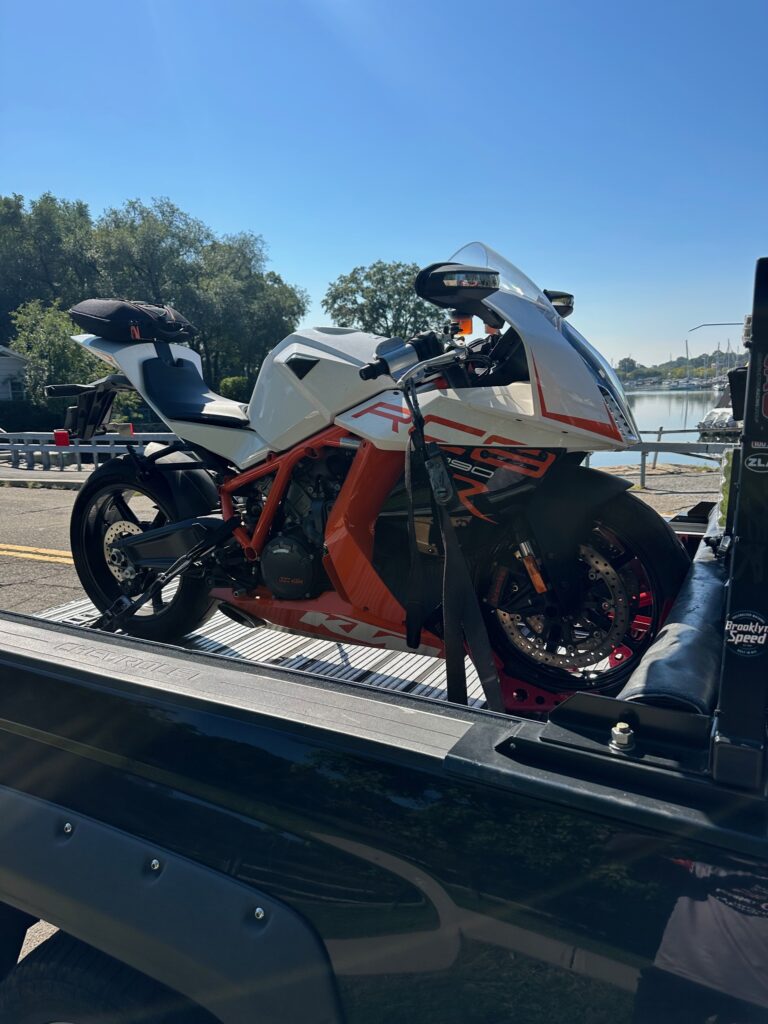
Do motorcycles pay toll when they are on a trailer?
When a motorcycle rides on or inside another vehicle, the toll system generally sees the transporting combination rather than a separate motorcycle trip. The truck’s classification, axle count, trailer, and account arrangement can influence the charge. A rider’s motorcycle transponder or discount should not be assumed to govern the carrier’s crossing.
For planned transport, ask the provider which route is likely and whether tolls are included in the estimate. The provider may avoid a low-clearance approach, a restricted roadway, or a bridge that creates unnecessary delay for the transport vehicle. The operational route can differ from the one a rider would take.
Cashless tolling still requires preparation
There may be no booth where a rider can stop and ask a question. Make sure the license plate is unobstructed and the registration address is correct. If using an electronic toll account, verify that the motorcycle and plate are listed accurately and follow the issuer’s mounting guidance. A device stored in a pocket or luggage compartment may not read as intended.
Check the account after crossing. A review takes only a few minutes and can catch a plate mismatch, unexpected classification, or duplicate transaction while trip details are fresh. Save the crossing date and approximate time if you expect to dispute a charge.
Bridge-day weather deserves its own check
Conditions at street level do not always describe an exposed span. Wind, rain, cold, and low visibility can make a bridge crossing demanding, particularly on a light motorcycle or for a new rider. Review the forecast and official traffic notices shortly before departure. If the rider is not comfortable, choose a safer time, an appropriate alternate route, or motorcycle transport.
Mechanical uncertainty belongs in the same decision. A questionable tire, charging problem, overheating concern, or recent repair is more serious when stopping space is limited. MAD Transpo NYC provides motorcycle roadside assistance, towing, and transportation in the metropolitan area, including transport to mechanics and dealerships, according to its service information.
A practical bridge-route worksheet
- Crossing: exact official name and operator.
- Direction: outbound and return listed separately.
- Vehicle state: ridden, flatbed, enclosed trailer, or other transport.
- Payment: registered transponder plan or plate billing.
- Conditions: forecast, traffic notices, construction, and rider comfort.
- Fallback: alternate crossing or transport plan if conditions deteriorate.
This worksheet is intentionally short. Its value comes from using current sources, not from collecting pages of old rate information.
Common shortcuts that create bad answers
Do not rely on a friend’s car charge, an undated screenshot, a search result that omits the payment method, or the assumption that every bridge into Manhattan is billed the same way. Do not attach a car transponder to a motorcycle without checking the account rules. Do not assume the absence of a booth means the crossing is free.
Most confusion disappears when the question changes from “Do NYC bridges charge motorcycles?” to “What does the official operator currently charge this motorcycle, in this direction, with this payment method?” That version can be answered and documented.
Where transport fits into the decision
A bridge toll by itself rarely determines whether to transport a motorcycle. Riders often choose transport because the bike is not roadworthy, registration or insurance is unresolved, the route is unfamiliar, weather is poor, or a dealer or mechanic must receive the bike during business hours. The quote should show how route costs are handled so the rider can compare complete options.
When providing details, include the bridge preference only if it is a true requirement. A professional may recommend another approach based on truck access, legal restrictions, or timing. Discuss the reason for the preference rather than dictating a route that may not fit the transport vehicle.
A bridge choice for a newly purchased motorcycle
Imagine a rider buying a used motorcycle in another borough late on a windy afternoon. The direct route includes an exposed bridge, the controls are unfamiliar, and the maintenance history is incomplete. The toll question matters, but it is not the most important fact. The rider should first verify registration and insurance, inspect the bike, review wind and traffic conditions, and decide whether riding is sensible at all.
If the bike is transported, the quote should account for the transport vehicle’s route and toll class. If an experienced, properly documented rider takes it, that rider should check the official bridge rate and payment setup. These are two different trips with different classifications. Treating them separately avoids both a billing assumption and a safety shortcut.
Keep a small crossing record for frequent rides
Riders who regularly cross between boroughs or into the wider metropolitan area can maintain a simple note with the bridge operator, official rate-page link, account plan, and date last verified. Add observations about wind exposure, construction, or merge complexity only as personal planning notes, not universal claims. Review the entry whenever the operator announces changes.
This habit is more useful than memorizing dollar amounts. It creates a path back to the current source and reminds the rider which assumptions produced the estimate. Before a group ride, share official links rather than quoting a number from memory. Each rider remains responsible for confirming their account and vehicle details.
Group rides should publish sources, not estimates
An organizer can link each official toll page and note which crossings the route uses. Riders then check their own plans and accounts. Collecting money based on one rider’s rate invites mistakes because payment methods and eligibility differ. If the route changes on the day, announce the new crossing before departure so nobody is surprised by billing.
Construction can change the useful crossing
Review official traffic notices for lane closures, maintenance, and special events. A bridge that is normally comfortable may become difficult when lanes narrow or approaches back up. Delay or choose an appropriate alternate rather than improvising after entering a restricted approach.
For a bridge-crossing transport estimate, send the origin, destination, motorcycle condition, and time window to MAD Transpo NYC and request a clear explanation of how expected tolls are included or itemized.