
A First motorcycle for New York City should feel predictable at walking speed, fit the rider’s body, and make sense for the parking and trips they actually have. Horsepower is only one specification. Seat reach, weight distribution, steering angle, heat, storage, maintenance access, insurance, and the route home all shape whether a new owner can learn without fighting the machine.
Begin in the parking lot, not on the highway
Sit on the motorcycle with the same footwear you expect to use. Can you reach the controls without locking your elbows? Can you turn the handlebar fully without trapping a thumb against the tank? Notice whether one or both feet reach the ground and whether the bike becomes suddenly heavy when it leans a few degrees. A sales-floor pose cannot replace slow-speed practice, but it reveals obvious fit problems.
Ask for the wet or curb weight rather than the lightest published figure. Fuel, fluids, luggage, locks, and accessories add mass. How that mass is carried matters too: a lower center of gravity may feel calmer during parking maneuvers than a lighter bike that carries weight high.
Match the machine to weekday reality
List the first six months of likely rides. A short commute with frequent stops favors easy clutch control, manageable heat, useful mirrors, and a comfortable upright view. Weekend highway trips add wind protection and sustained-speed comfort. Carrying tools or work gear raises luggage questions. If the honest list is mostly practice sessions and neighborhood errands, buying for a hypothetical cross-country tour can make learning harder.
New York streets ask for attention at low speed. Uneven pavement, painted markings, delivery traffic, tight parking spaces, and abrupt stops reward smooth controls more than impressive acceleration. A beginner-friendly motorcycle is not a permanent identity; it is a platform for building judgment.
First motorcycle costs live beyond the price tag
Request insurance quotes for the exact model before committing. Similar-looking motorcycles can produce very different premiums. Add sales tax, registration, inspection, training, protective equipment, security devices, routine service, tires, battery care, and parking. If the bike needs immediate work, price that work with a mechanic instead of subtracting a hopeful amount from the asking price.
Storage can be a monthly cost or a daily risk. Check whether the building permits motorcycles, how the gate operates, and whether the space supports a robust lock without blocking others. Street parking exposes the bike to weather, contact damage, theft risk, and changing curb rules. The right purchase still needs a lawful place to live.
Used-bike inspection should be unemotional
A clean photograph does not show cold-start behavior, charging health, steering-head play, tire age, fluid leaks, chain condition, or evidence of a fall. Arrange an independent inspection when your experience is limited. Verify the vehicle identification number and documents, and make sure the seller has the authority to transfer ownership. Walk away from pressure, inconsistent paperwork, or a request to misstate the sale.
Modifications deserve questions. A loud exhaust, lowered suspension, altered lighting, removed turn signals, or nonstandard controls may affect comfort, legality, reliability, or insurance. Original parts and maintenance records are useful, but neither replaces a mechanical assessment.
Plan the motorcycle’s first trip before paying
A new rider may be legally able to ride the purchase home and still be unprepared for that particular route. Consider traffic, weather, darkness, bridge crossings, unfamiliar controls, and whether registration and insurance are complete. Bringing an experienced licensed rider is one option. Professional transport to a residence, training area, dealership, or mechanic is another.
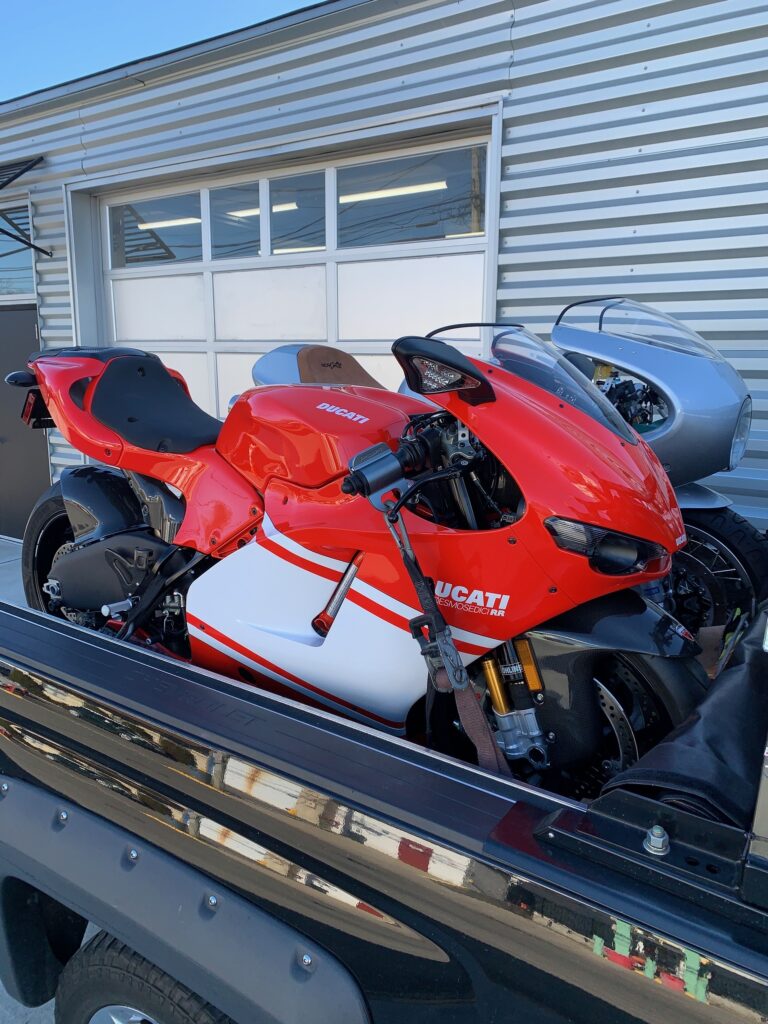
MAD Transpo NYC says it transports motorcycles to mechanics and dealerships and handles vintage motorcycles, dirt bikes, trikes, ATVs, and Can-Am vehicles in the New York City metropolitan area. If transport is the plan, disclose whether the motorcycle runs, rolls, steers, and has working brakes before pickup.
Training changes what “fits” means
A recognized rider course gives structured time with braking, clutch control, turning, and hazard awareness. Skills practiced on a training motorcycle help a buyer evaluate their own bike more intelligently. Training does not eliminate the need for gradual exposure: the first solo rides should be short, familiar, and chosen for low traffic and good weather.
Protective equipment must fit as carefully as the motorcycle. A certified helmet should be snug without pressure points, gloves should preserve lever feel, boots should support the ankle, and riding apparel should stay positioned during movement. Budget for this before accessories that are mainly cosmetic.
A test for competing choices
Score each candidate from one to five on low-speed confidence, reach to controls, real trip suitability, storage fit, insurance cost, service access, and condition. Write one sentence explaining each score. This turns vague excitement into comparable evidence. If two motorcycles remain close, favor the one with clearer records, easier parts and service access, and fewer modifications.
Do not let a salesperson or friend define the bike as “too small” before you have learned on it. A machine that invites practice is more valuable than one that makes every parking maneuver feel like a test.
The purchase decision should leave room to learn
A sensible first motorcycle is capable enough for planned roads but forgiving enough to expose mistakes without magnifying them. It fits the rider today, not an imagined future version. It can be stored, insured, maintained, and brought home without improvisation. Those are not cautious compromises; they are the conditions that let riding become enjoyable.
Think about maintenance access before falling in love
A motorcycle that suits the rider can still be a poor first ownership experience if routine parts are hard to obtain or qualified service is far away. Call nearby shops and ask whether they service the model, how they schedule basic maintenance, and whether common consumables are readily available. This is especially important for older, rare, highly modified, or gray-market machines.
Learn the tire sizes and approximate replacement options. Tires age even when tread remains, so inspect date codes and condition with a knowledgeable professional. Check the owner’s manual availability and whether the motorcycle comes with working factory systems rather than warning lights masked by modifications. The goal is not to eliminate character; it is to know what ownership will require.
A first-month progression that leaves margin
During week one, focus on the controls, storage routine, pre-ride inspection, and short familiar routes. In week two, repeat low-speed and braking practice from formal training. Add a modest new road condition only when the existing one feels calm. By weeks three and four, the rider can evaluate comfort, mirror position, luggage needs, and service questions using real experience rather than shopping assumptions.
Delay passengers, large group rides, and major modifications. Each changes handling or attention, and several changes at once make feedback hard to interpret. Keep a small notebook of discomfort, mechanical observations, and questions for an instructor or technician. A thoughtful first month produces better upgrade decisions than buying accessories at delivery.
Resale value is not a riding requirement
Advice about which motorcycle “holds value” can distract from fit, condition, and learning. A bike that retains a higher percentage but discourages practice is not automatically economical. Choose a sound example, maintain it, keep records, and avoid irreversible modifications until experience reveals what actually needs to change.
If the motorcycle you choose needs delivery from a seller, dealership, storage facility, or mechanic, give the exact bike, condition, addresses, and access notes to MAD Transpo NYC for a transport assessment.