When a motorcycle is damaged, many riders make the same decision in the moment: if it still starts, they try to ride it home. On the surface, that feels like the cheaper option. Why pay for a tow if the bike can technically still move?
The problem is that a motorcycle can be rideable and still be unsafe. And once a damaged bike is ridden through city traffic, rough pavement, potholes, stop-and-go congestion, and turns, a minor issue can quickly become a much bigger repair bill.
In many cases, it is actually cheaper to tow a damaged motorcycle than to risk riding it.
Why Riders Try to Ride It Anyway
The logic makes sense in the moment. A rider sees a bent lever, scraped fairing, loose mirror, flat spot, or minor impact damage and assumes it is cosmetic. If the engine starts and the bike rolls, it feels easier to just take it home.
But motorcycles are not like cars. Small damage can affect stability, braking, control, steering alignment, tire condition, lighting, or fluid integrity in ways that are not obvious right away.
That is why towing is often the smarter financial decision, not just the safer one.
Hidden Costs of Riding a Damaged Motorcycle
Here are the costs riders often do not think about until it is too late.
1. Turning a minor repair into a major one
A motorcycle that only needed a tow and inspection can become much more expensive if additional parts fail while riding. A slightly bent component, rubbing brake part, weakened bracket, or unstable tire can create more damage during the trip home.
2. Tire and wheel risk
If the wheel, tire, rim, or suspension took any hit at all, riding the bike can make the damage worse. What could have been a manageable shop visit can turn into a more serious repair.
3. Brake or control failure
A bike that looks mostly fine after a drop, contact incident, or small crash may still have compromised braking or steering. If that causes another fall or collision, the cost goes way beyond a tow.
4. Ticket or enforcement exposure
If the damage affects your lights, plate mount, signals, or overall road legality, riding it can expose you to citations or additional hassle.
5. Personal injury costs
The most expensive outcome is not always mechanical. If you get hurt trying to ride a damaged bike home, the real cost becomes far greater than a tow fee.
Why This Matters Even More in NYC
In New York City, damaged motorcycles face more stress right away. Rough roads, lane changes, sudden stops, potholes, bridge approaches, traffic pressure, and close vehicle spacing all make a damaged bike harder to manage safely.
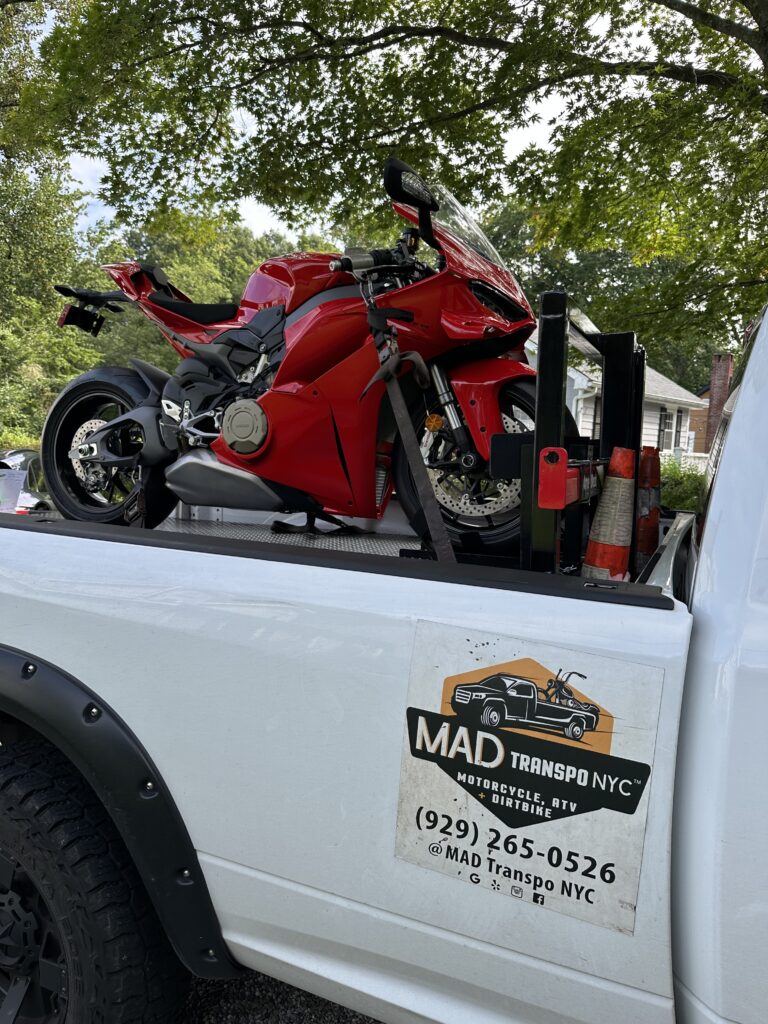
That is one reason local riders call MAD Transpo NYC after drops, tip-overs, curb contact, parking damage, and post-incident recovery situations. A short tow is often much cheaper than the second wave of damage that happens after someone decides to “just ride it a little.”
Signs You Should Tow Instead of Ride
If any of these apply, towing is usually the smarter call:
- Bent handlebars or controls
- Tire damage or low pressure after impact
- Scraping noises
- Brake feel changed
- Leaking fluid
- Broken lights or turn signals
- Loose bodywork or plate bracket
- The bike tracks strangely or feels unstable
Final Thoughts
The cheapest decision is not always the one that avoids the tow bill. In many real-world situations, towing a damaged motorcycle is cheaper than riding it and making the problem worse. If the bike is damaged and you are unsure, the safer move is usually the more affordable one in the long run.
For safe motorcycle towing and transport in NYC, contact MAD Transpo NYC