
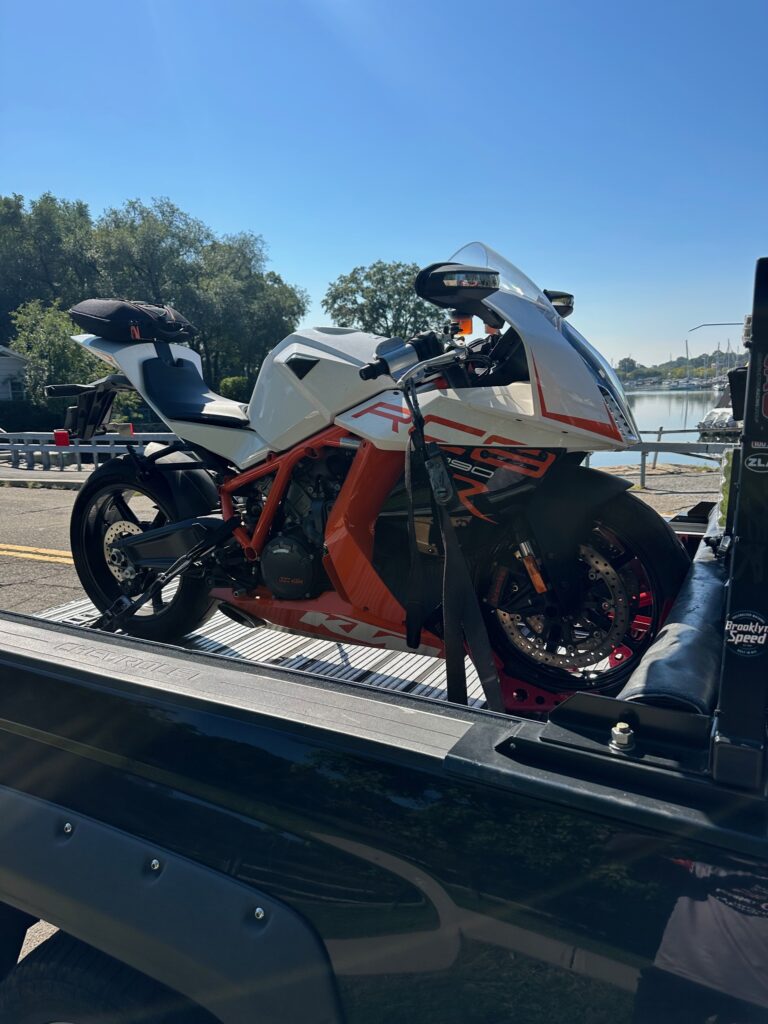
A non-running motorcycle creates a different kind of problem than a normal breakdown. If the bike will not start, you are not just dealing with a mechanical issue. You are also dealing with the question of how to move it without scratching it, dropping it, straining the controls, or causing a second round of damage while trying to solve the first one.
Whether the motorcycle is in a garage, curbside spot, parking lot, alley, shop, or tow release location, moving a non-running bike takes more care than most people expect.
Why Non-Running Bikes Get Damaged So Easily
When a motorcycle cannot power itself, every movement puts more strain on balance and handling. Riders and helpers often try to push, drag, or angle the bike in ways that work against its weight.
That is when problems happen:
- The bike tips during loading
- Fairings get scraped
- Controls or levers bend
- Tie-down points are used incorrectly
- The motorcycle shifts during transport
- The front wheel is forced awkwardly during movement
The bike may already be vulnerable, which makes correct handling even more important.
The Biggest Mistake: Trying to “Figure It Out” on the Spot
Many damaged motorcycles get worse after the original breakdown because someone tries to improvise. They recruit a friend, push the bike farther than they should, use the wrong ramp angle, secure it poorly, or try to muscle it into a vehicle not meant for motorcycle transport.
That often leads to more damage than the original mechanical problem.
Safer Ways to Move a Non-Running Motorcycle
The right move depends on the situation, but the guiding principles are simple:
Keep the bike upright and stable
Every step of movement should reduce the chance of tipping.
Avoid dragging or awkward rolling
If brakes are locked, tires are flat, or steering is compromised, forcing the bike can damage more parts.
Use proper motorcycle transport methods
A motorcycle should be secured with the right support and handling, not treated like random cargo.
Think about destination first
Know whether the bike is going to a shop, home garage, storage location, or another release point before moving it.
Situations Where Professional Motorcycle Transport Makes Sense
MAD Transpo NYC is especially useful when a non-running motorcycle needs to be moved from:
- A curbside breakdown location
- A garage or tight parking spot
- A repair shop to another destination
- A tow pound or impound release site
- A private residence
- A location where the bike cannot safely stay overnight
This is especially important in NYC, where tight spaces and traffic make DIY movement more frustrating and more risky.
Signs You Should Not Try to Move It Yourself
- The bike is heavy and hard to balance
- It has a flat tire or wheel damage
- It will not roll smoothly
- The steering feels compromised
- You do not have the right loading setup
- You are in a cramped or dangerous area
- You already feel unsure about the process